


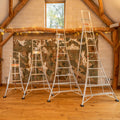
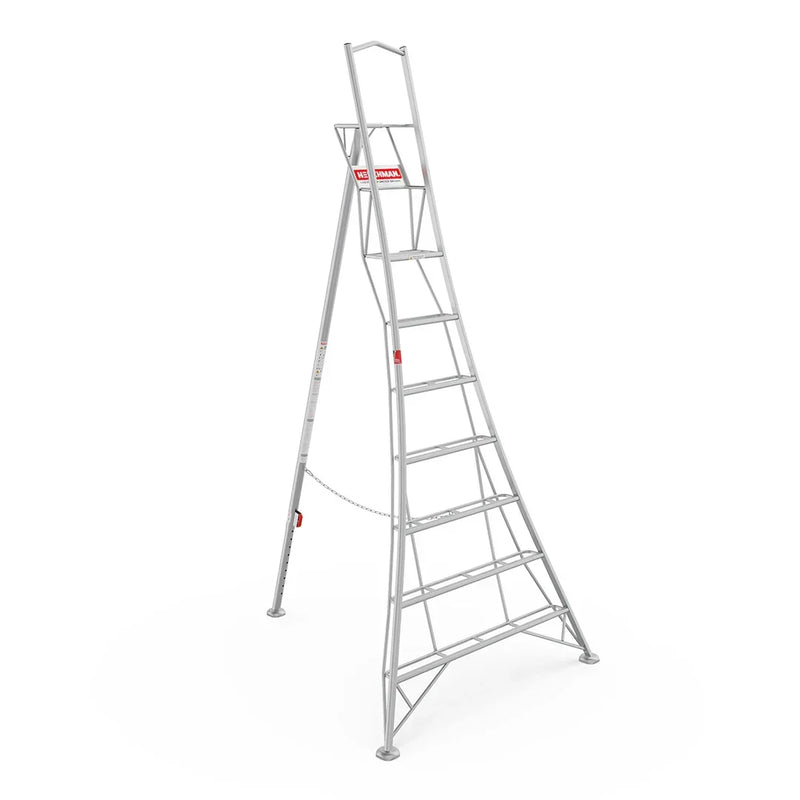
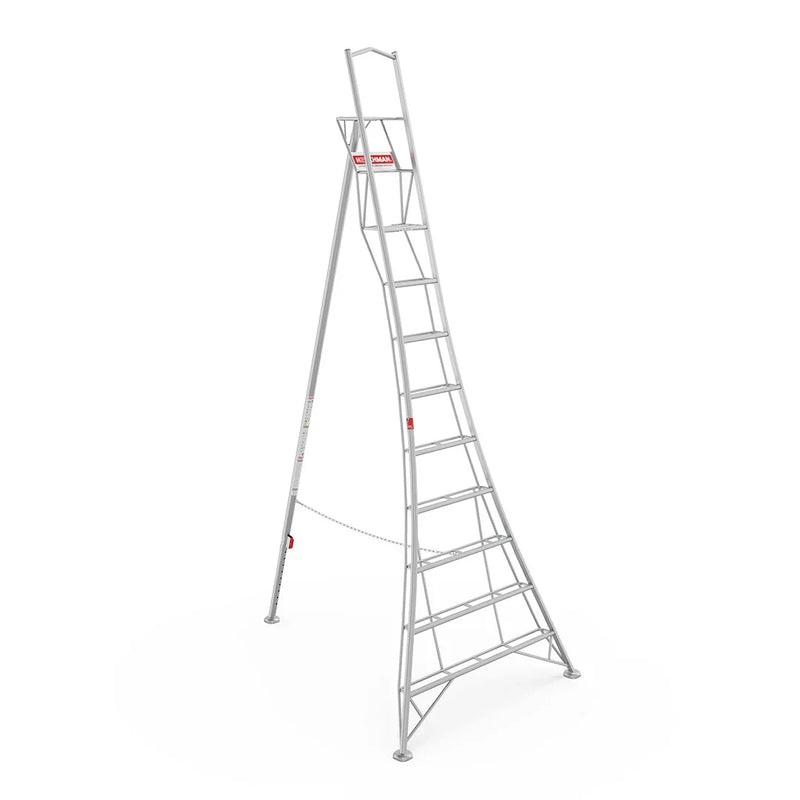
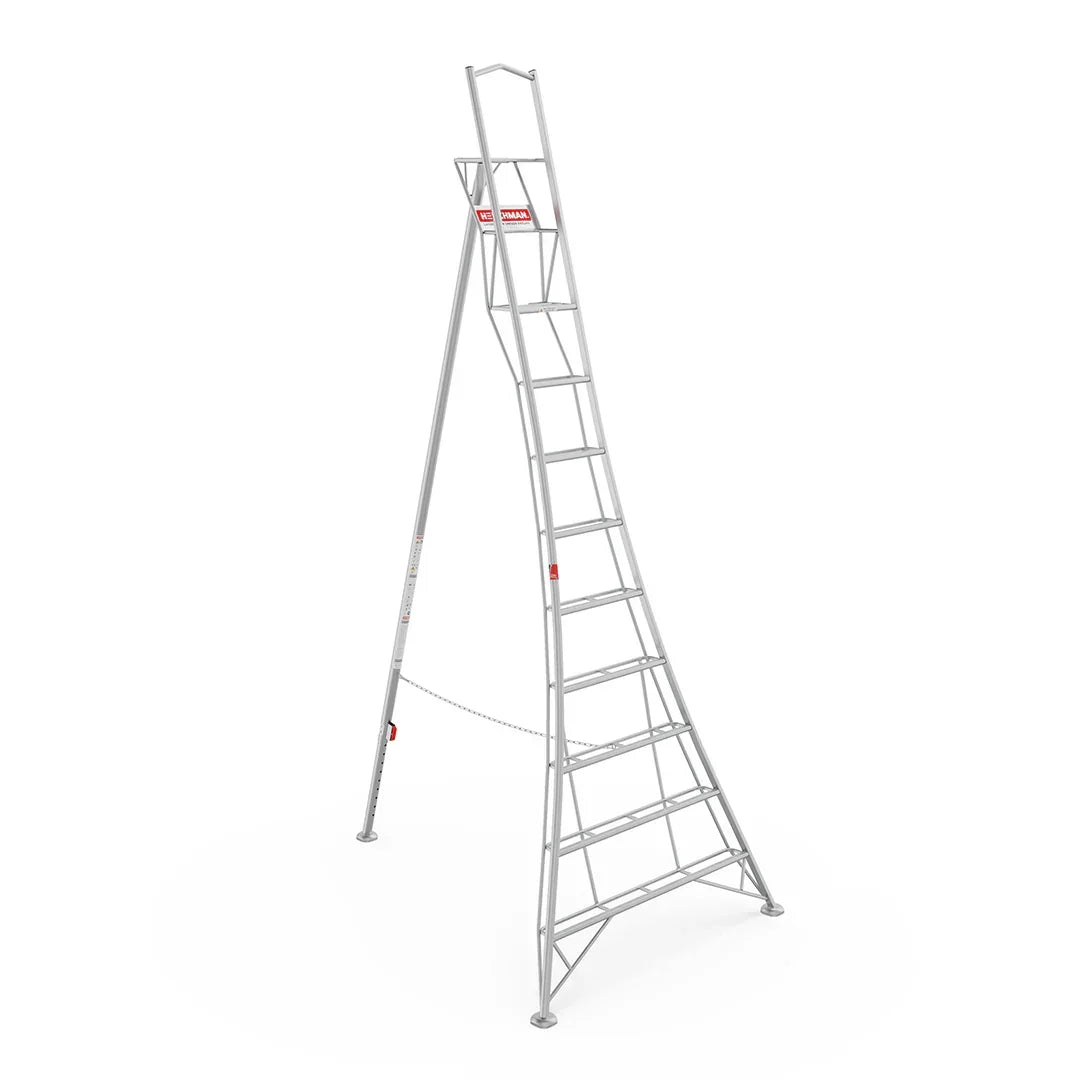
Henchman Rear Adjustable Leg Tripod Ladder
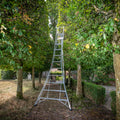
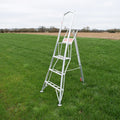
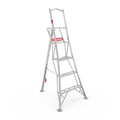
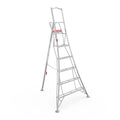
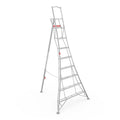
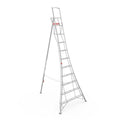
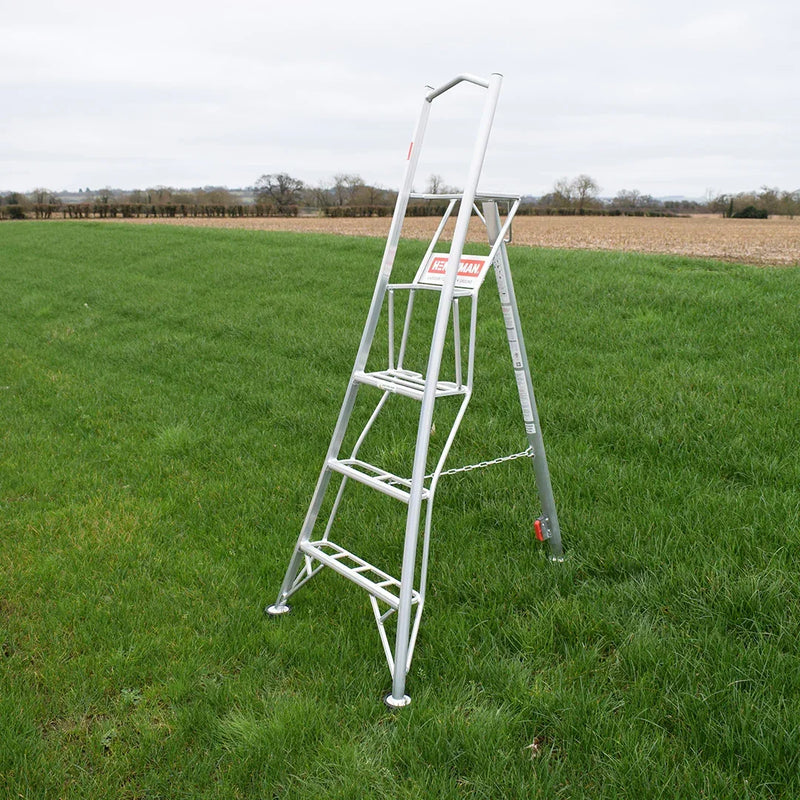
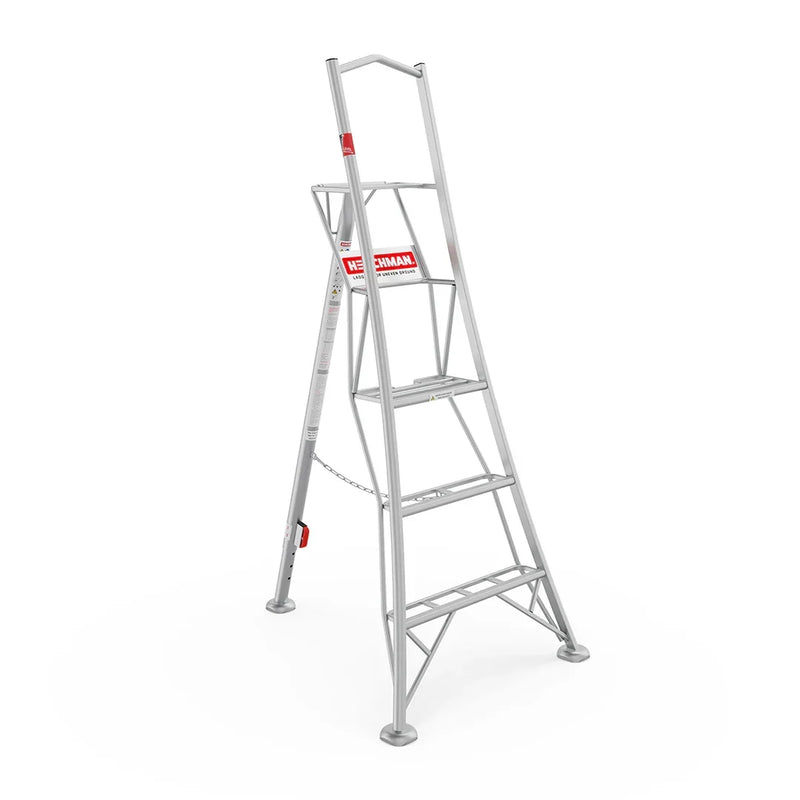
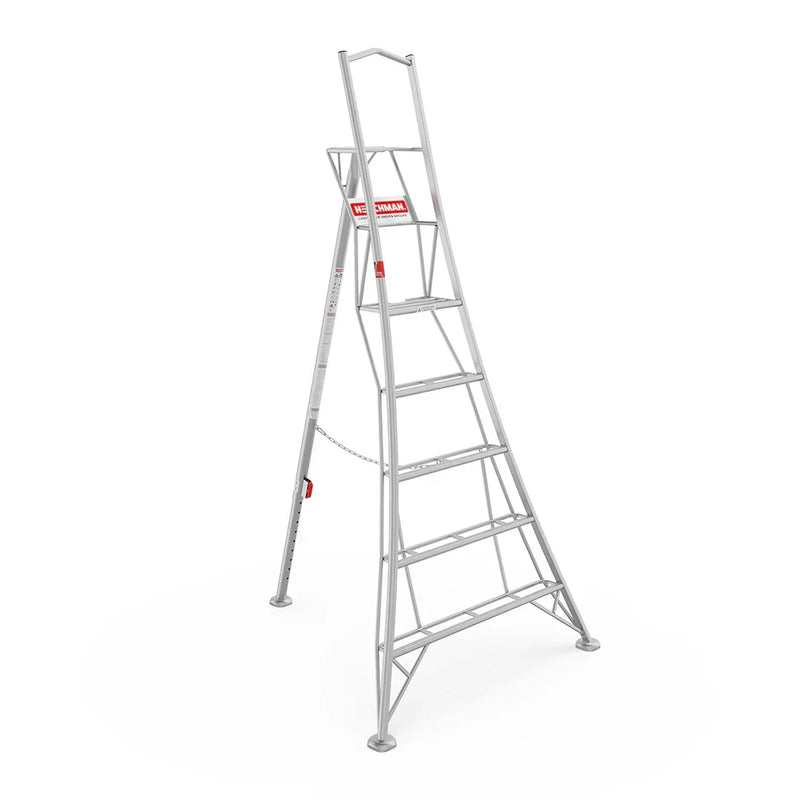
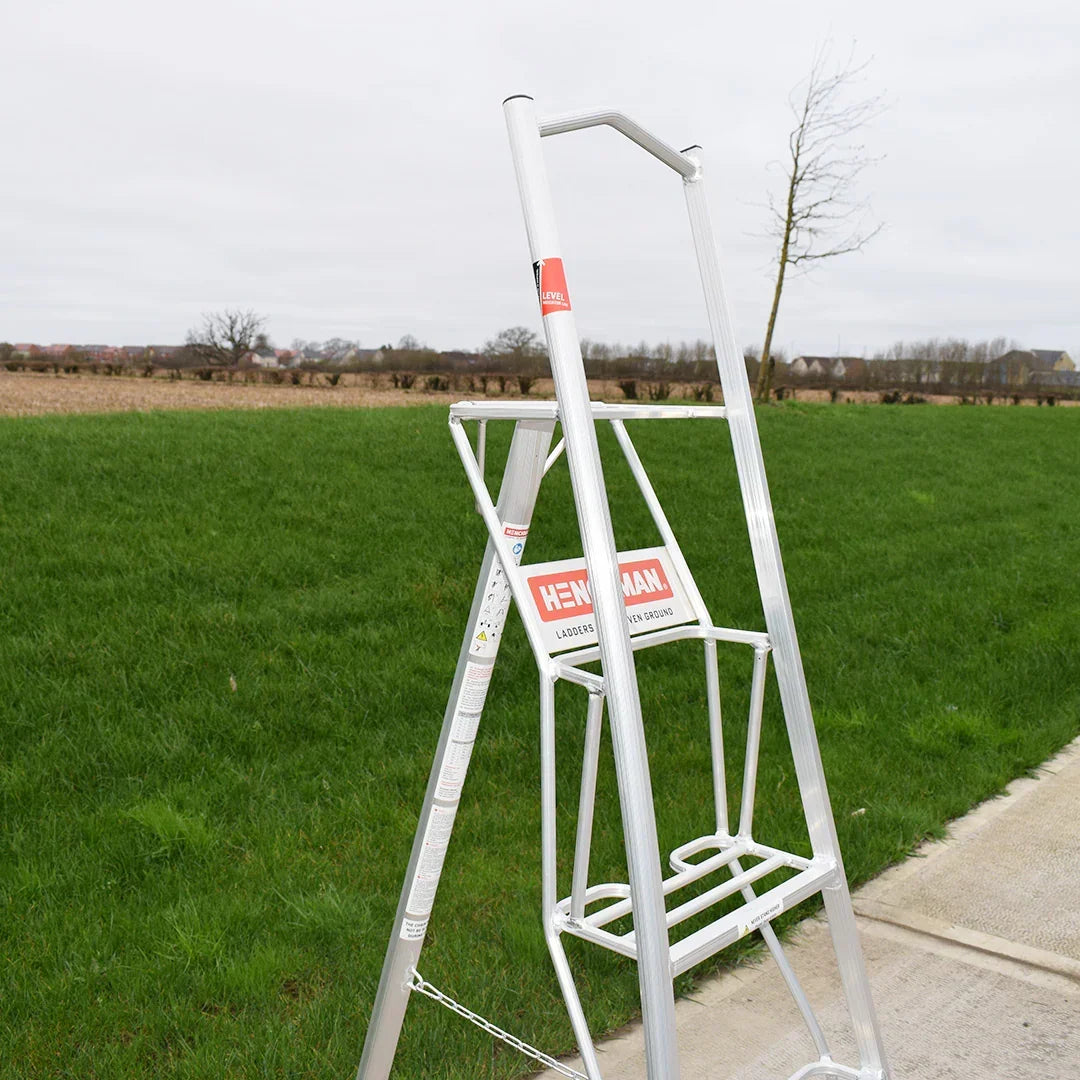
The Henchman Rear Leg Adjustable Tripod Ladder provides a safe solution for inside and outside tasks. Its unique design is perfectly suited for flat or slightly sloping terrain, providing that much-needed stability when dealing with occasional hills, bumps or steps in your terrain.
Please select a variant to add to your basket


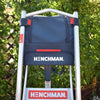
The Henchman Tool Bag has been designed to be used with any platformed tripod ladder, making it easier to transport tools up and down the ladder safely and securely.
You asked - we delivered. Secure your tripod on our outdoor ladder hooks for a simple, space-saving storage solution. Can be locked for extra protection. Comes in a pack of 2.
Henchman Rear Adjustable Leg Tripod Ladder
Safe and secure: the Henchman Rear Adjustable Leg Tripod Ladder
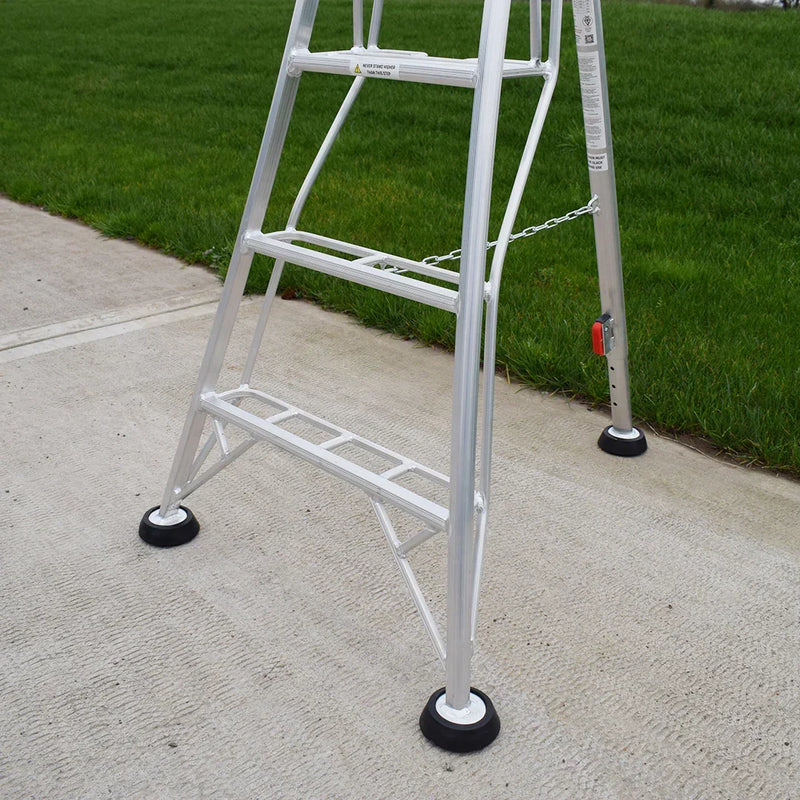
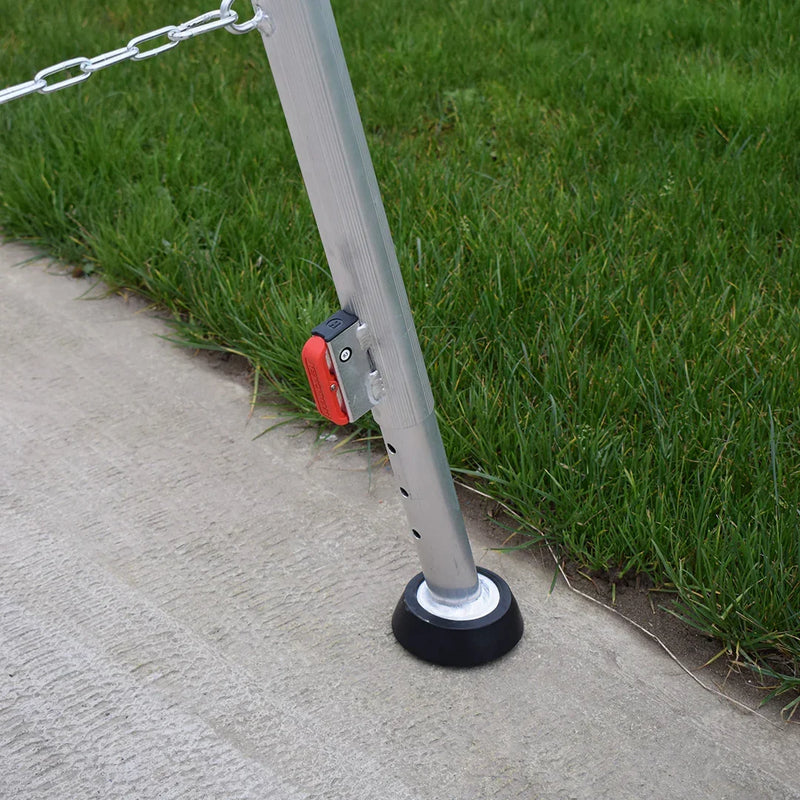
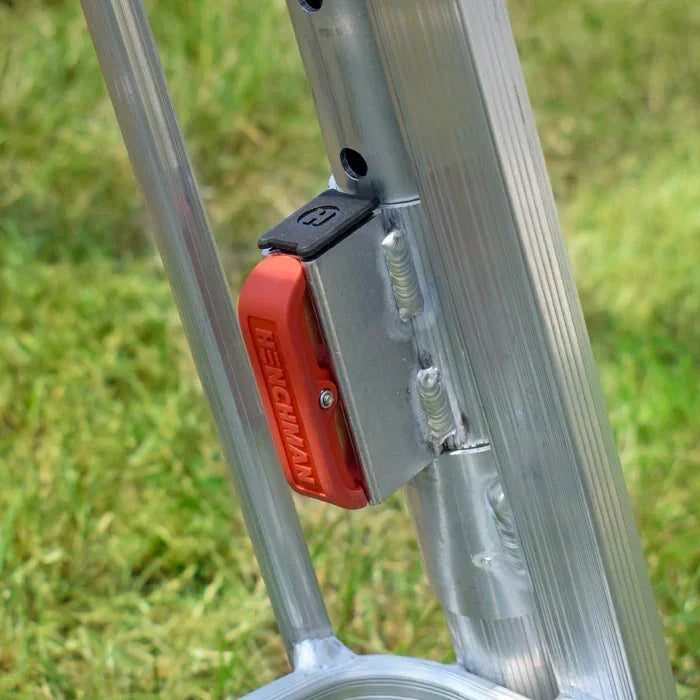
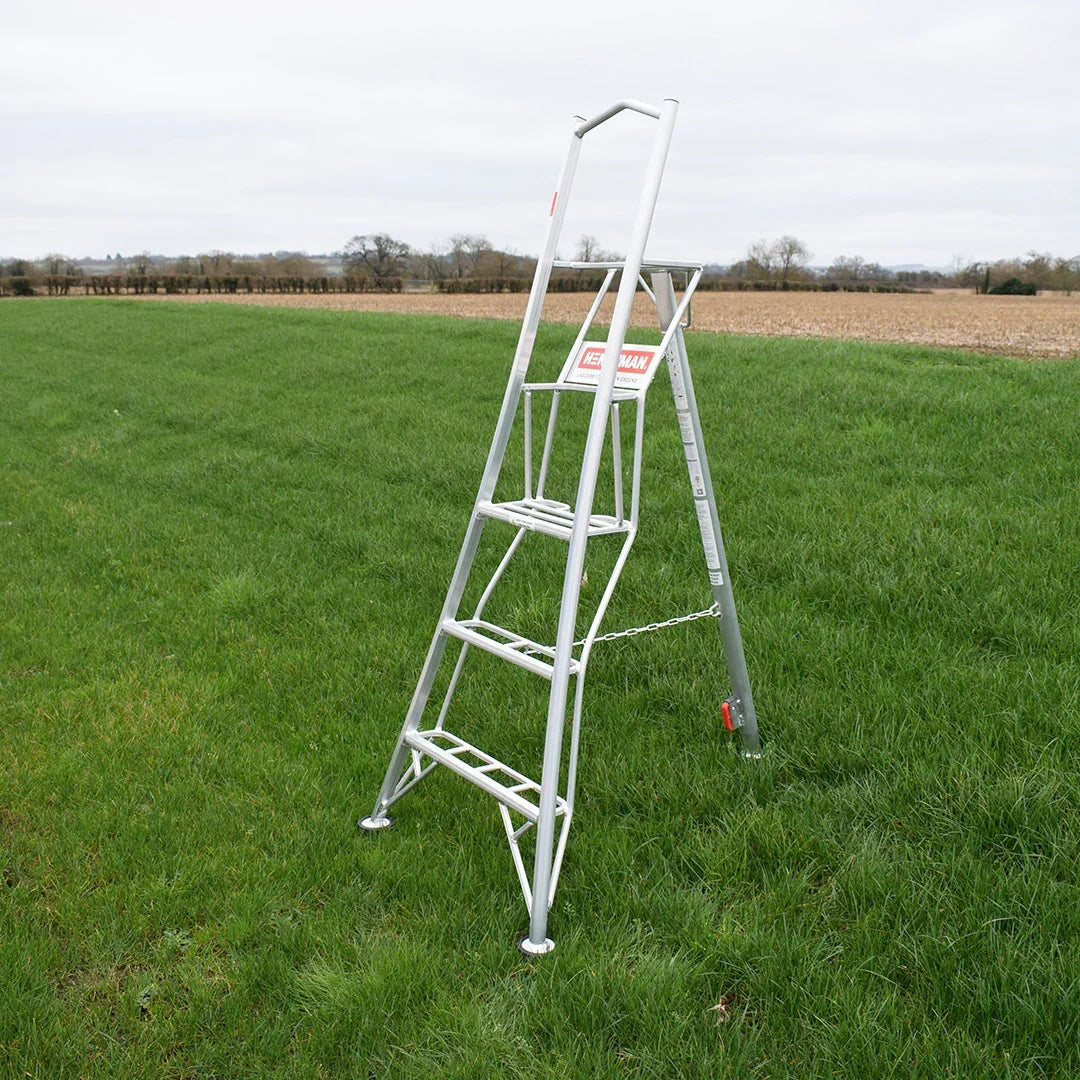
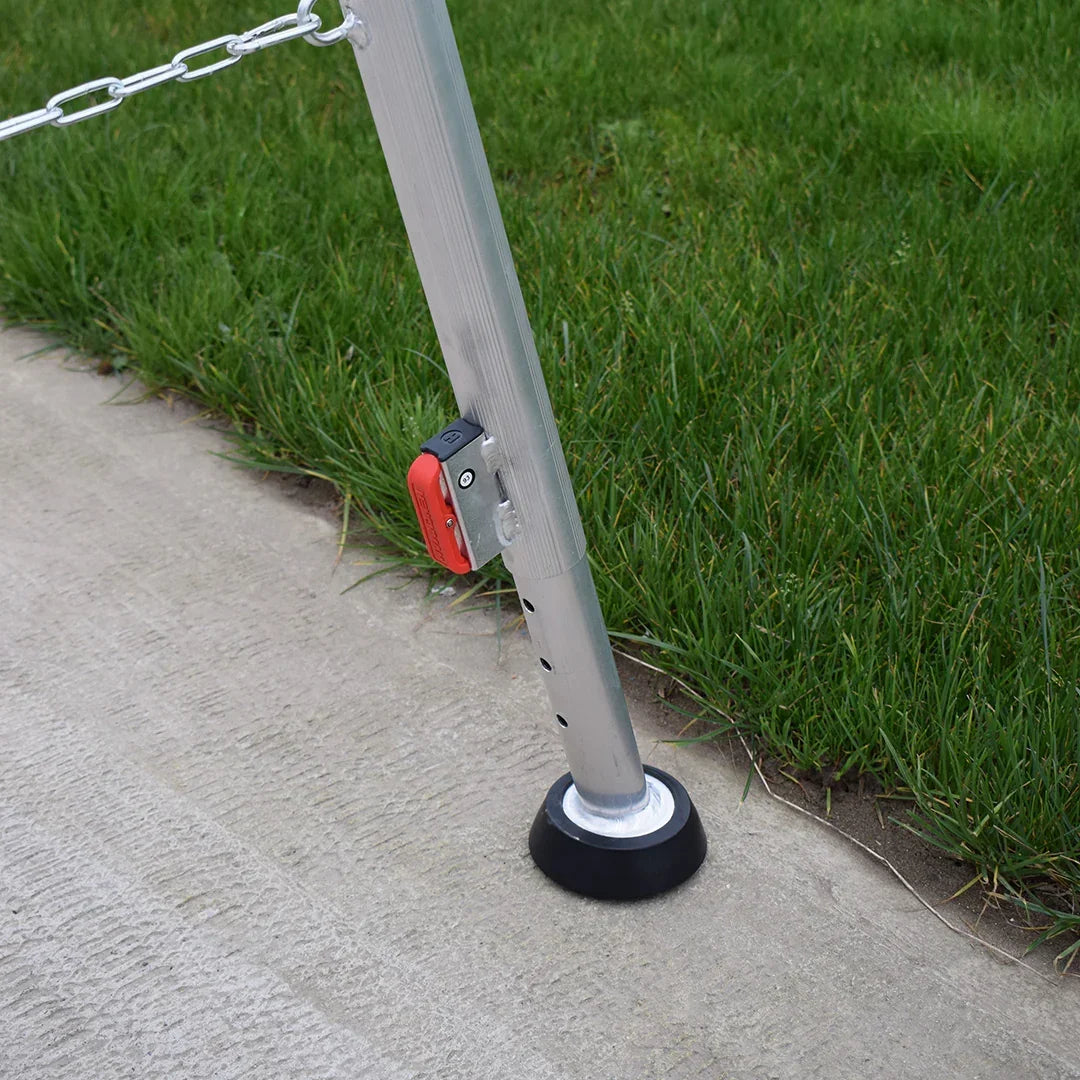
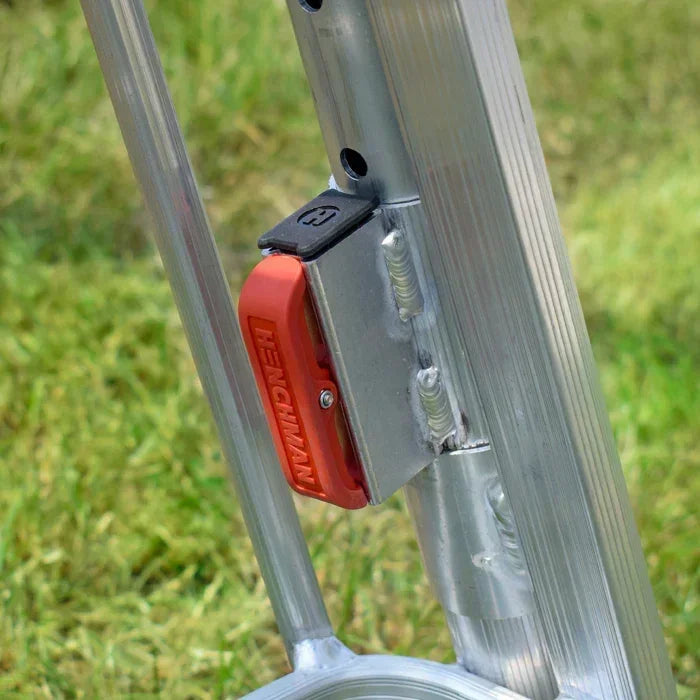
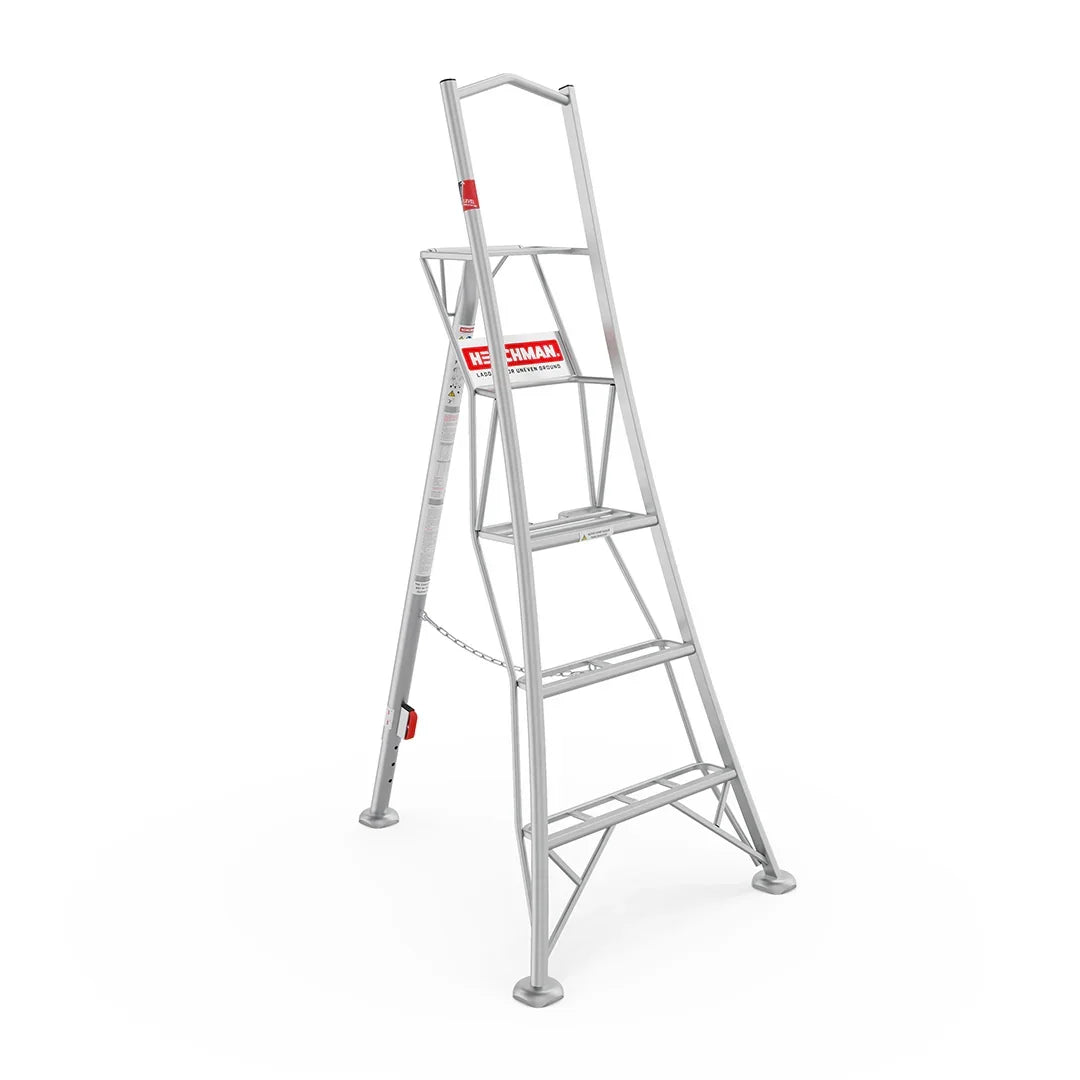
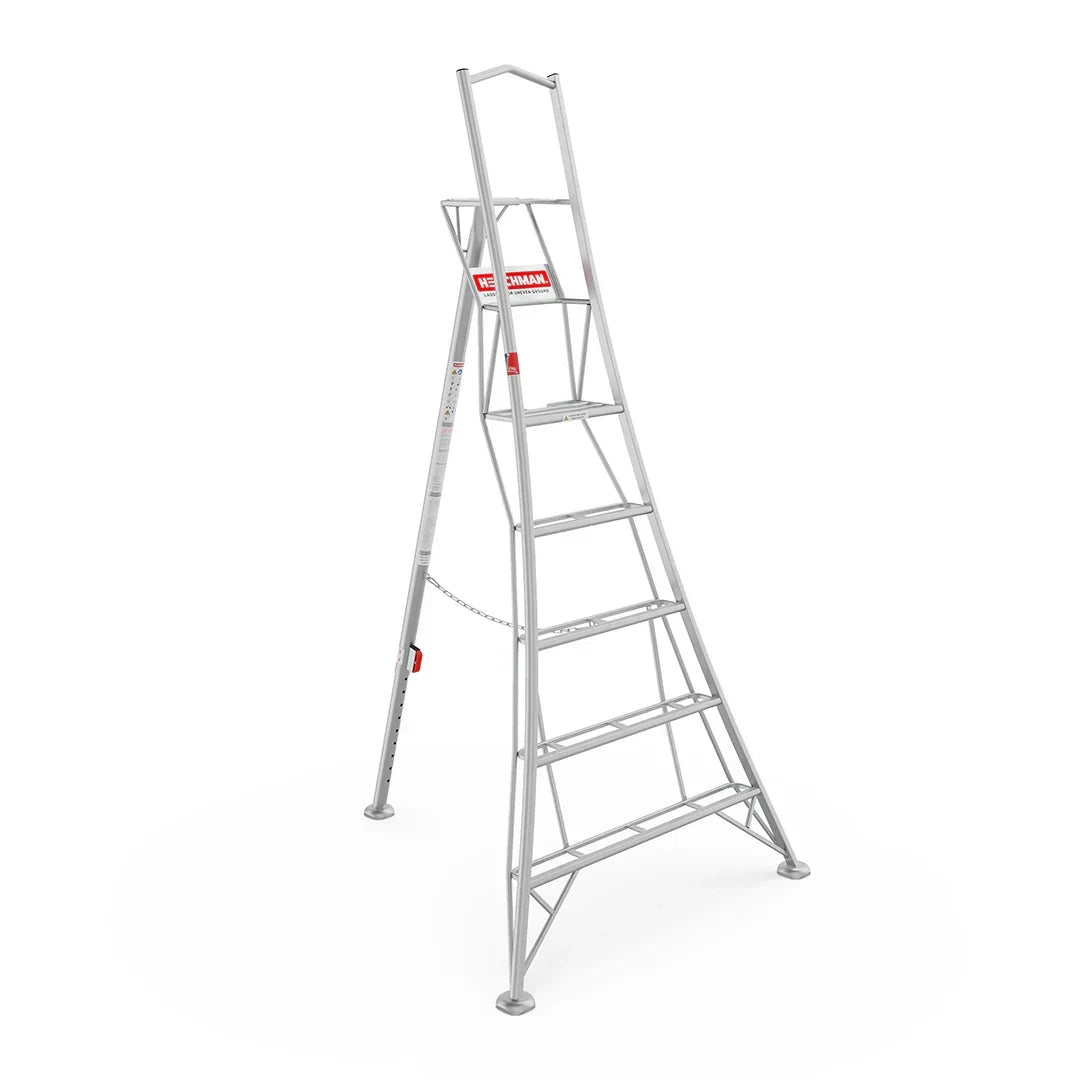
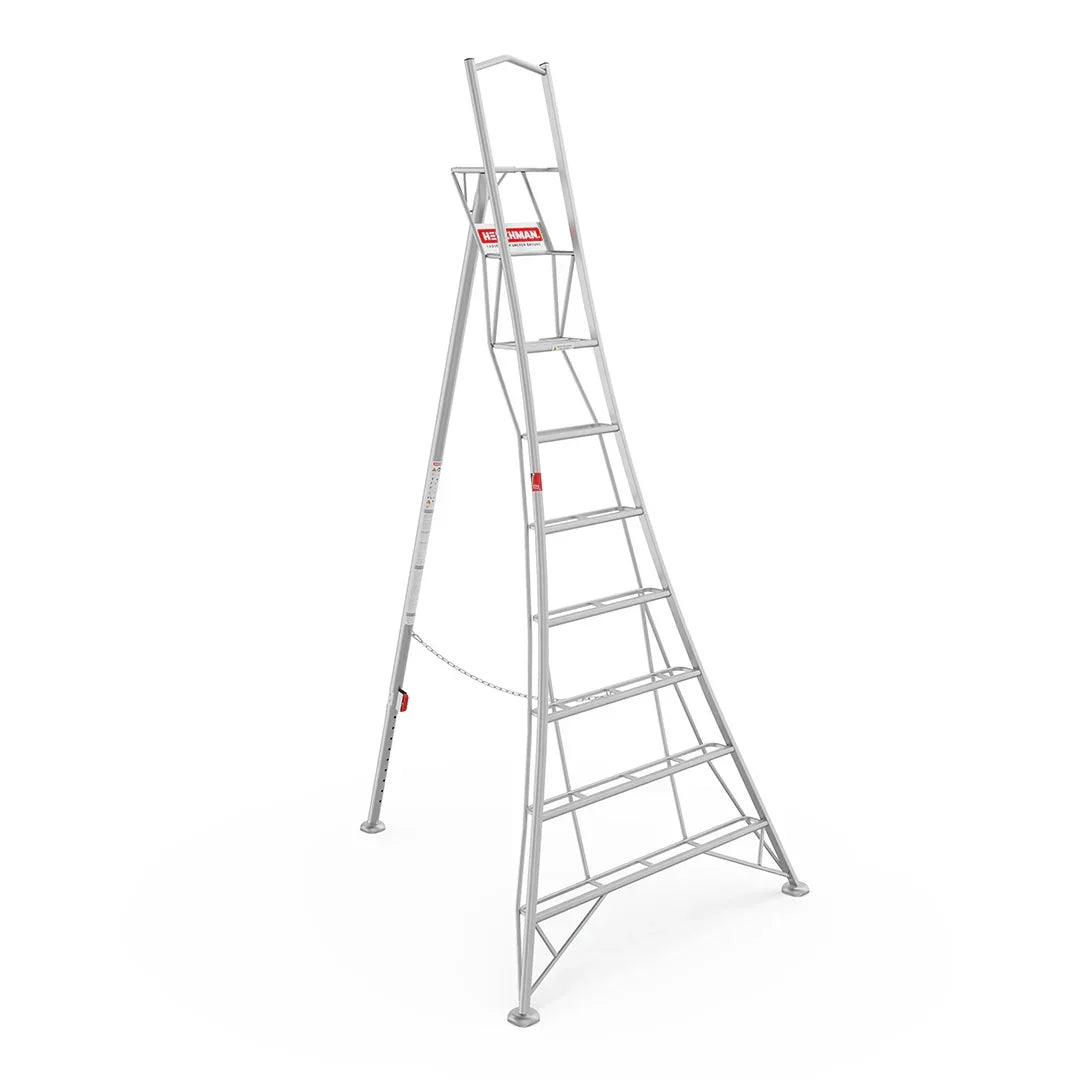
The Henchman Rear Adjustable Leg Tripod Ladder model is designed for safe use on flat or slightly sloping ground. The rear leg of the ladder can be individually adjusted to counteract slopes or steps. Keep reading to learn more about our 1-leg adjustable ladder.
Note: If you are working on uneven terrain, then take a look at the Fully Adjustable Tripod. Try our Fully Adjustable PRO if you plan on regularly transporting the ladder to different projects. If you're unsure about which ladder you need, then our Find a Ladder tool will help.

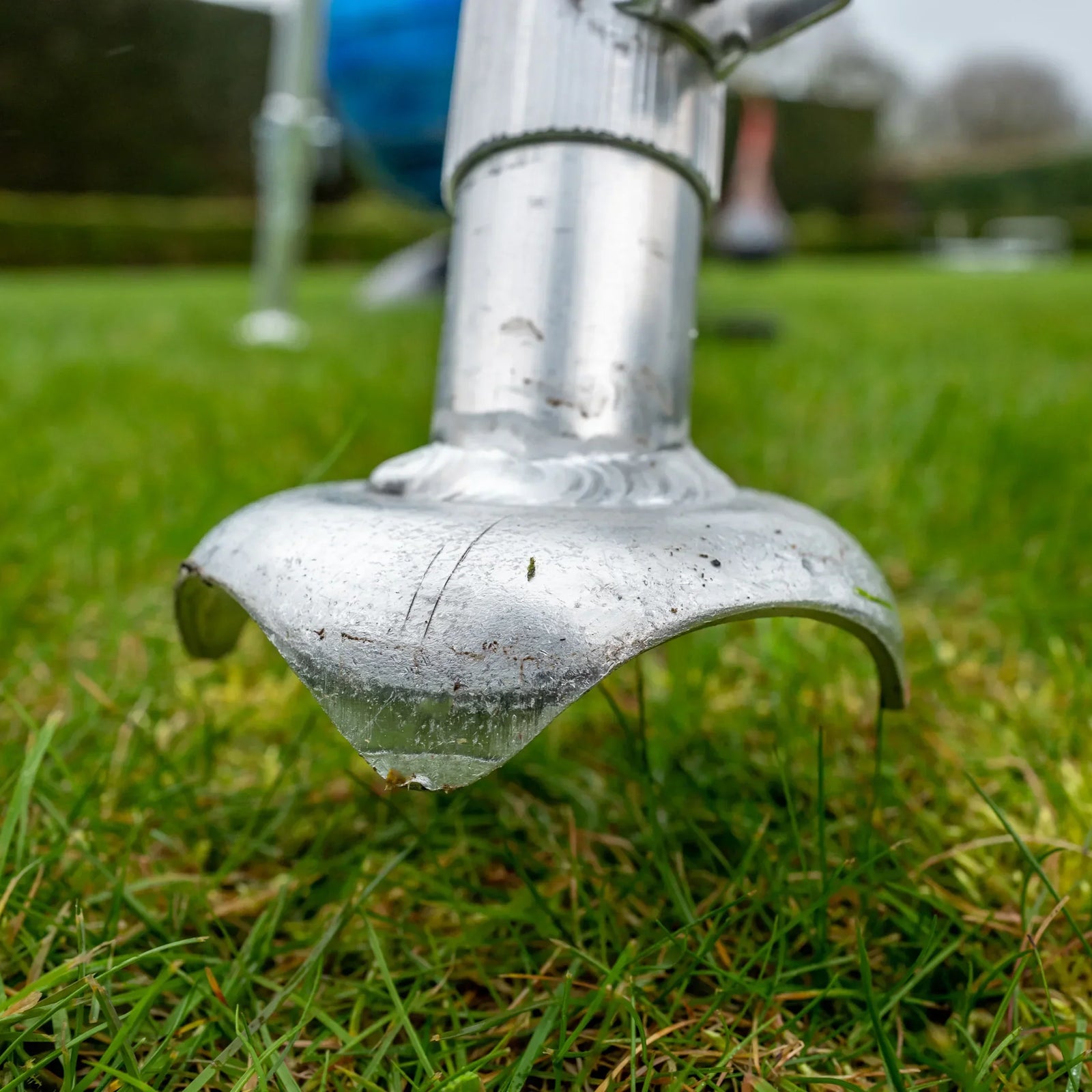
Stability on slightly uneven surfaces

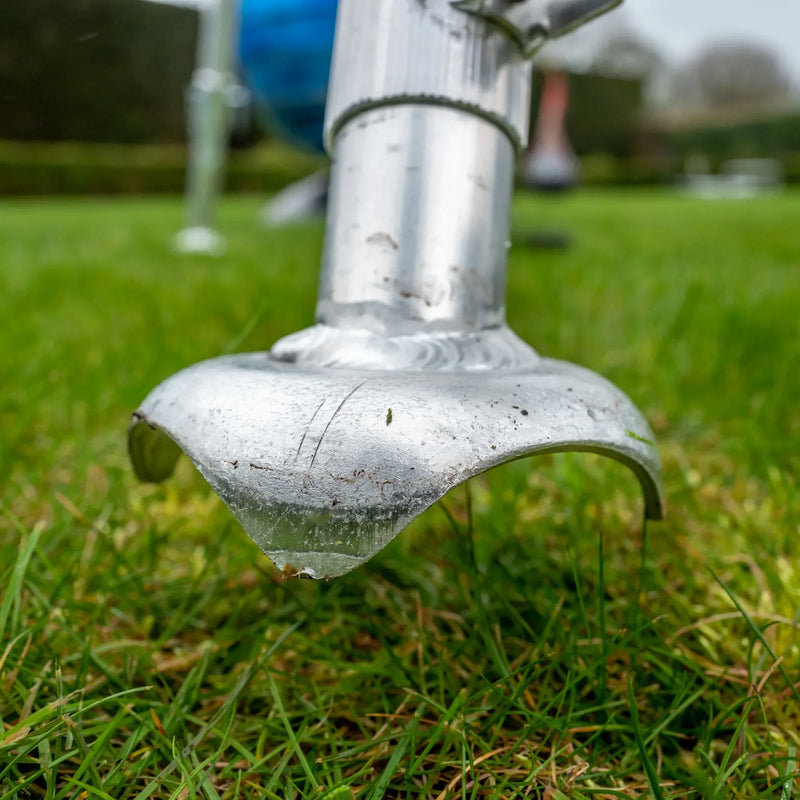
Get close and personal
Professional standard that’s built to last

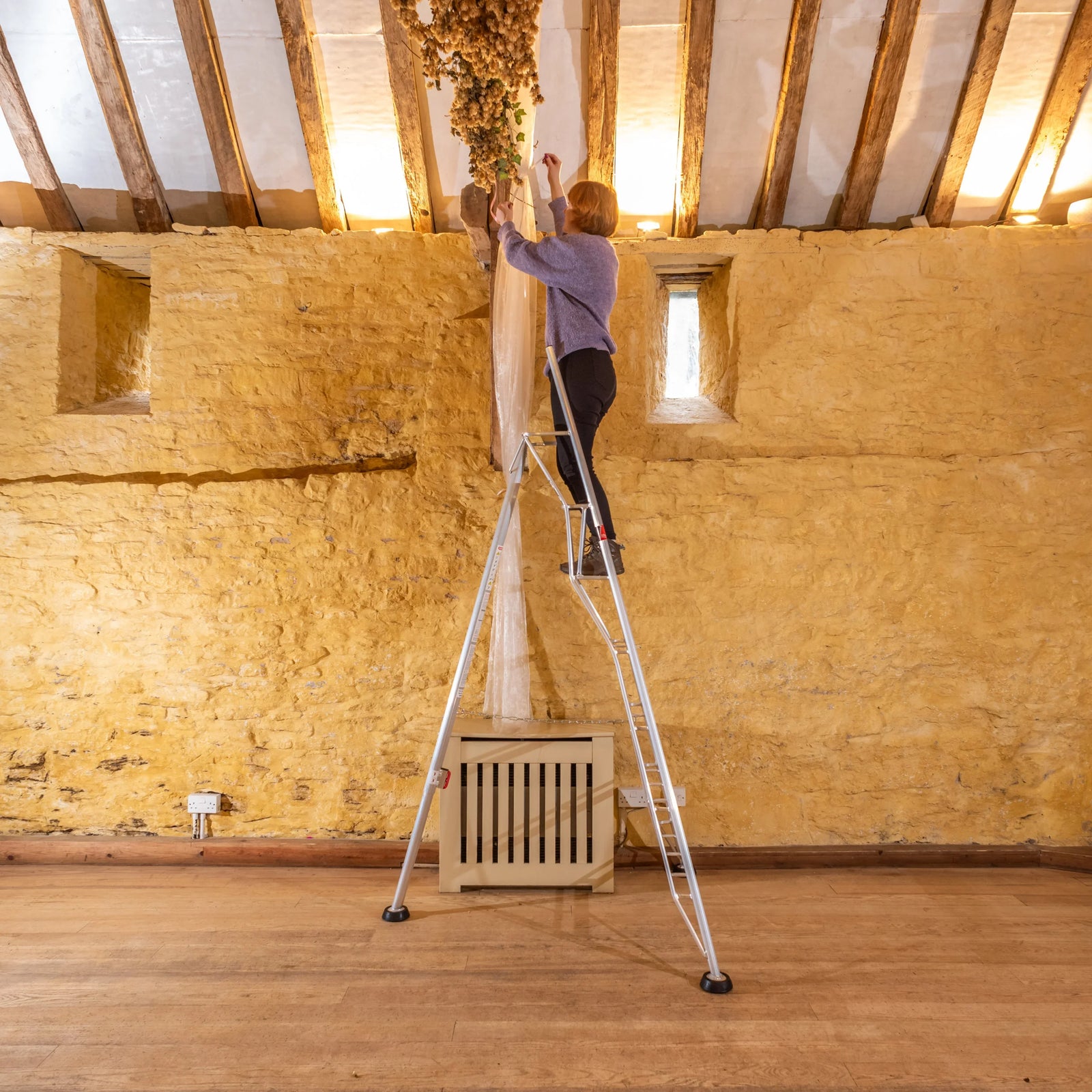
A ladder for both indoor and outdoor projects
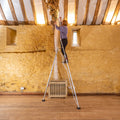
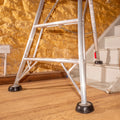
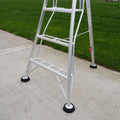
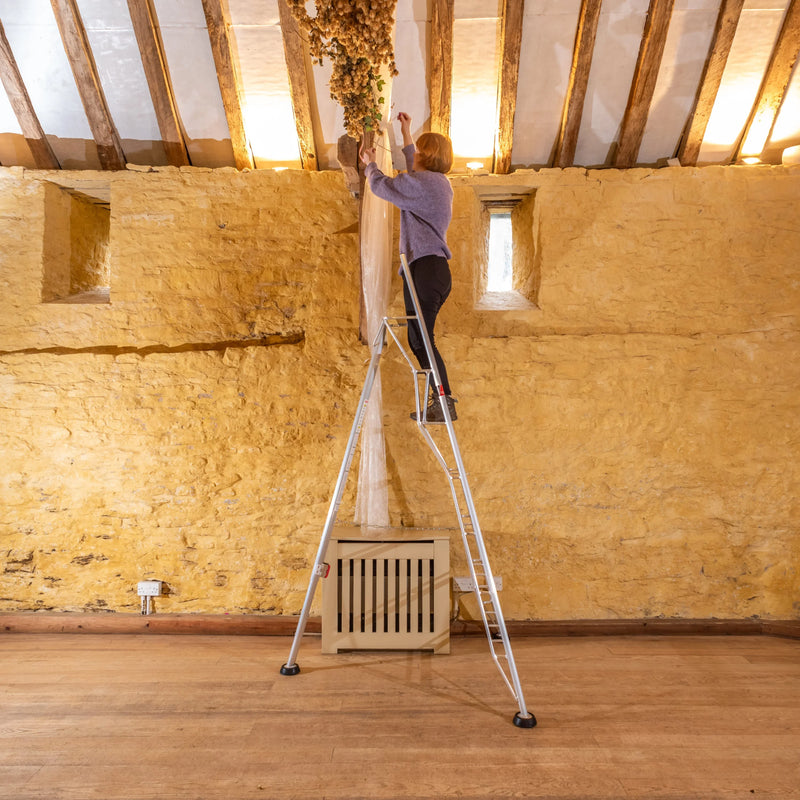
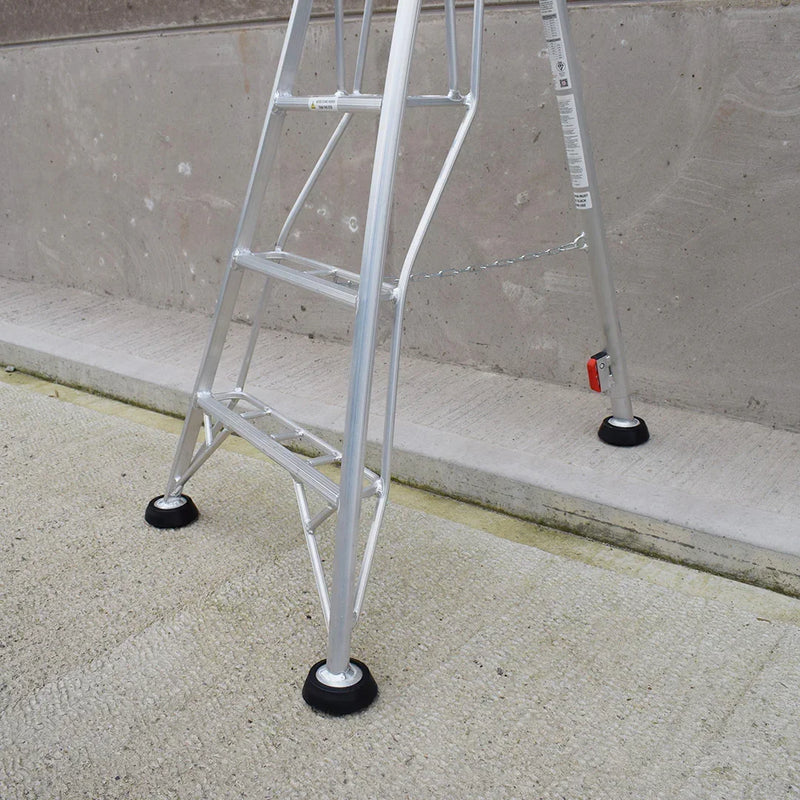
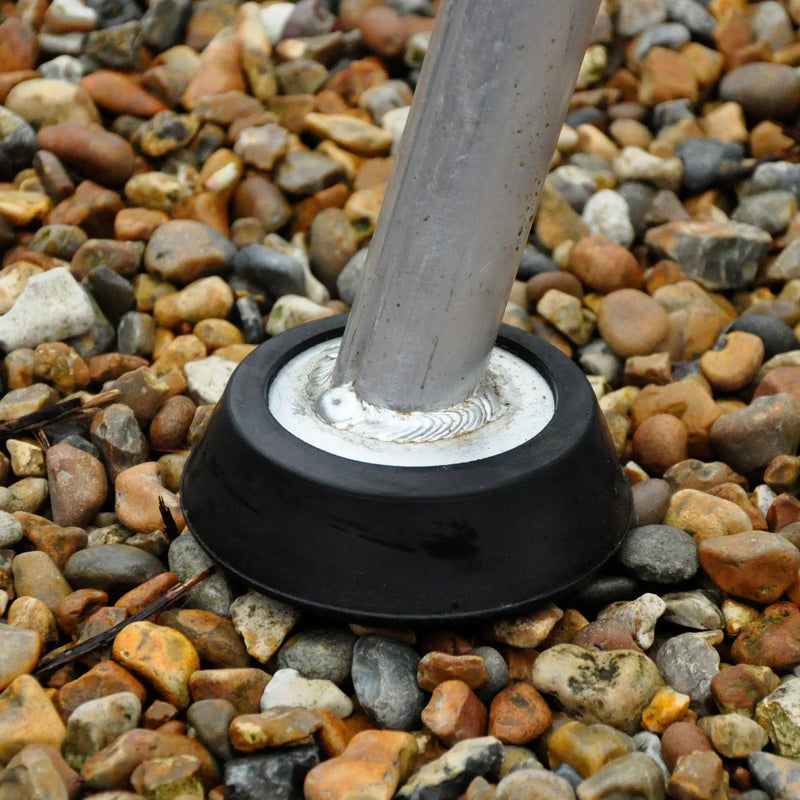
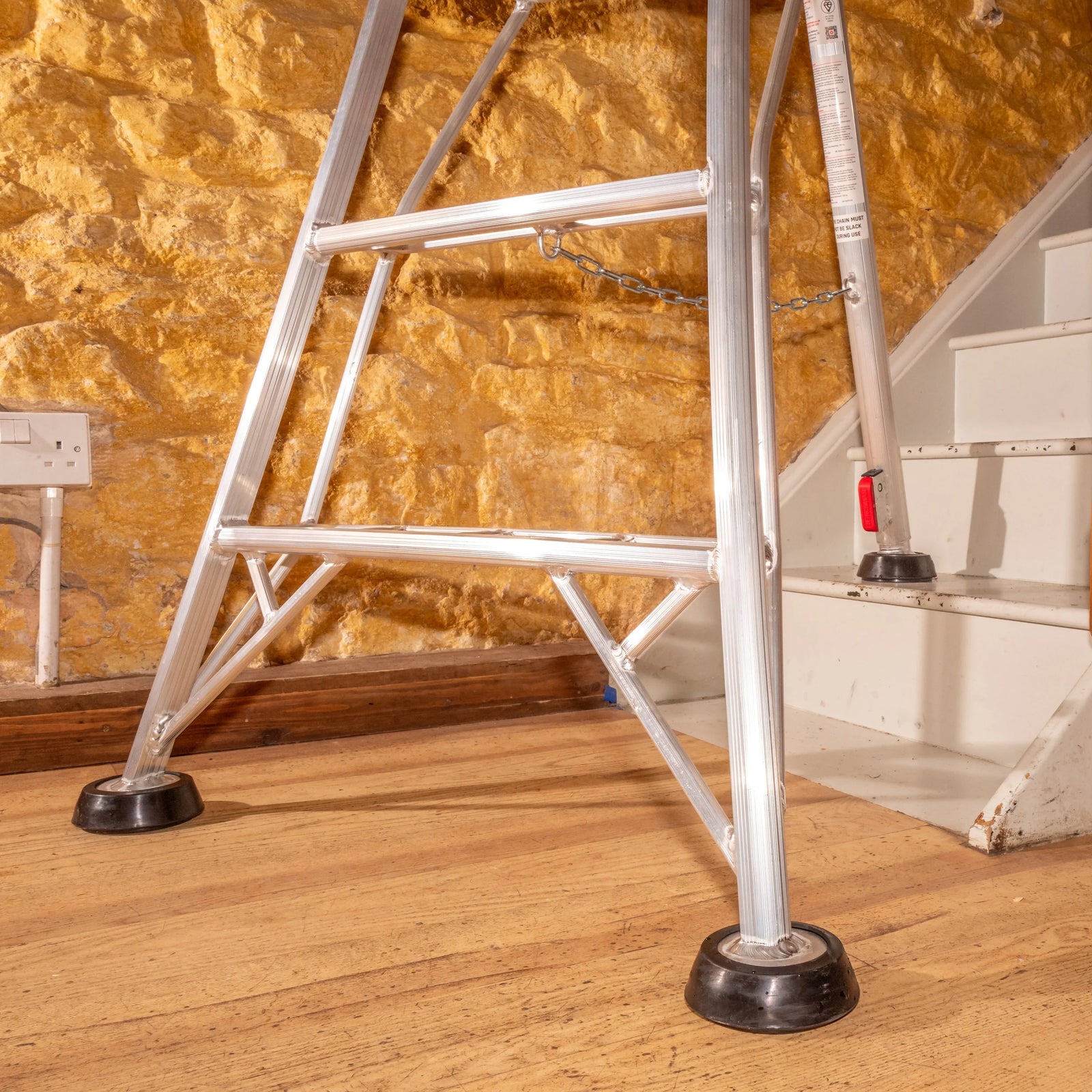
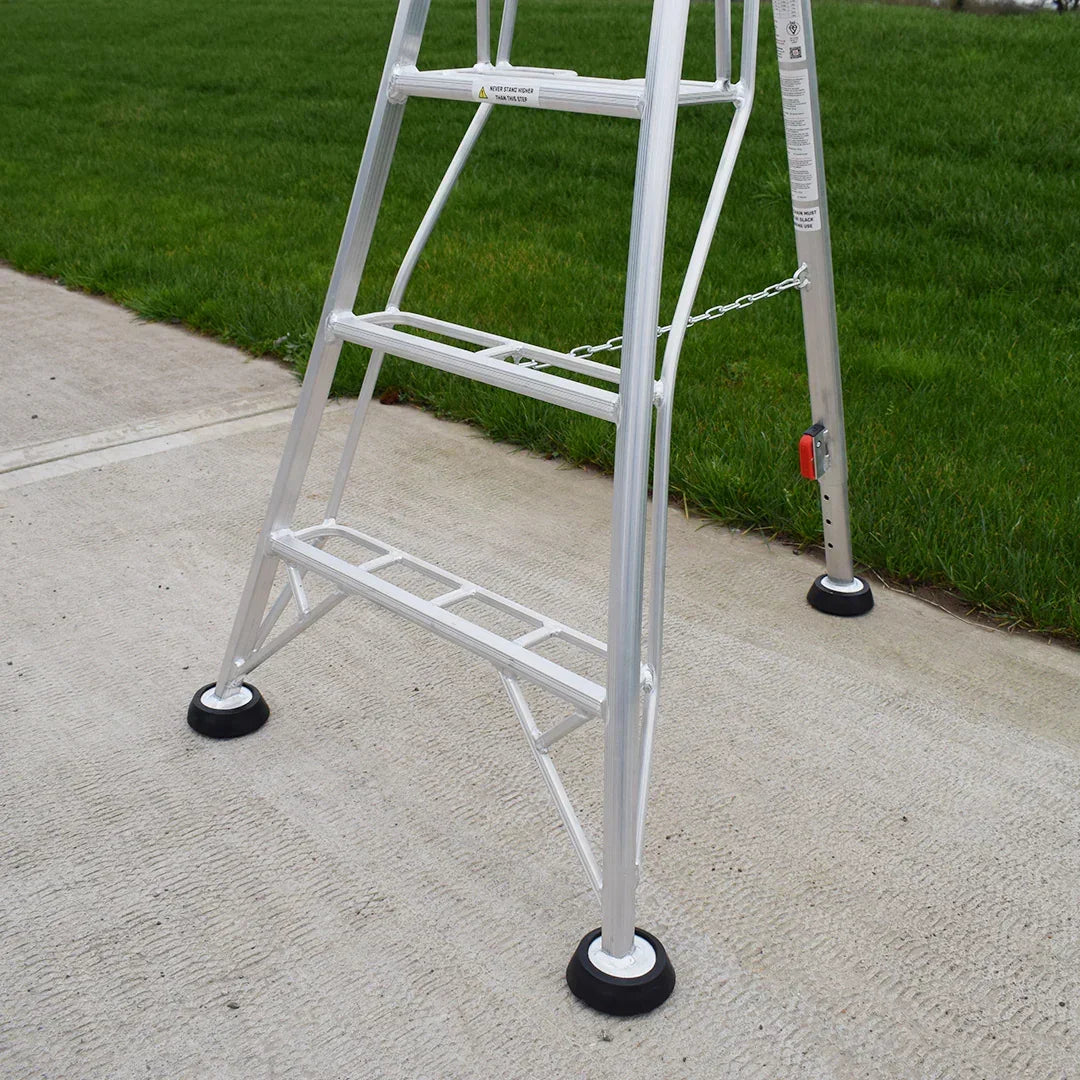
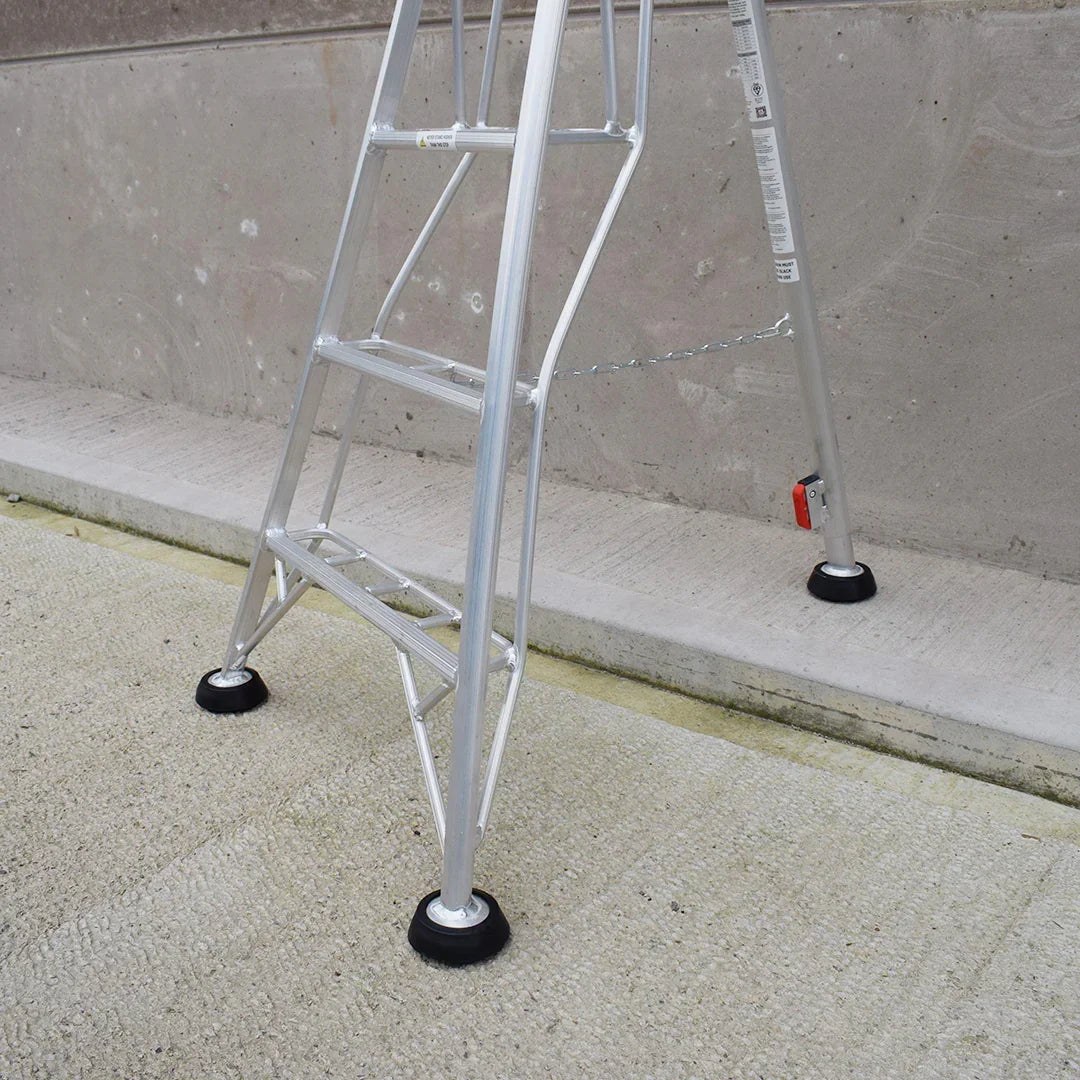
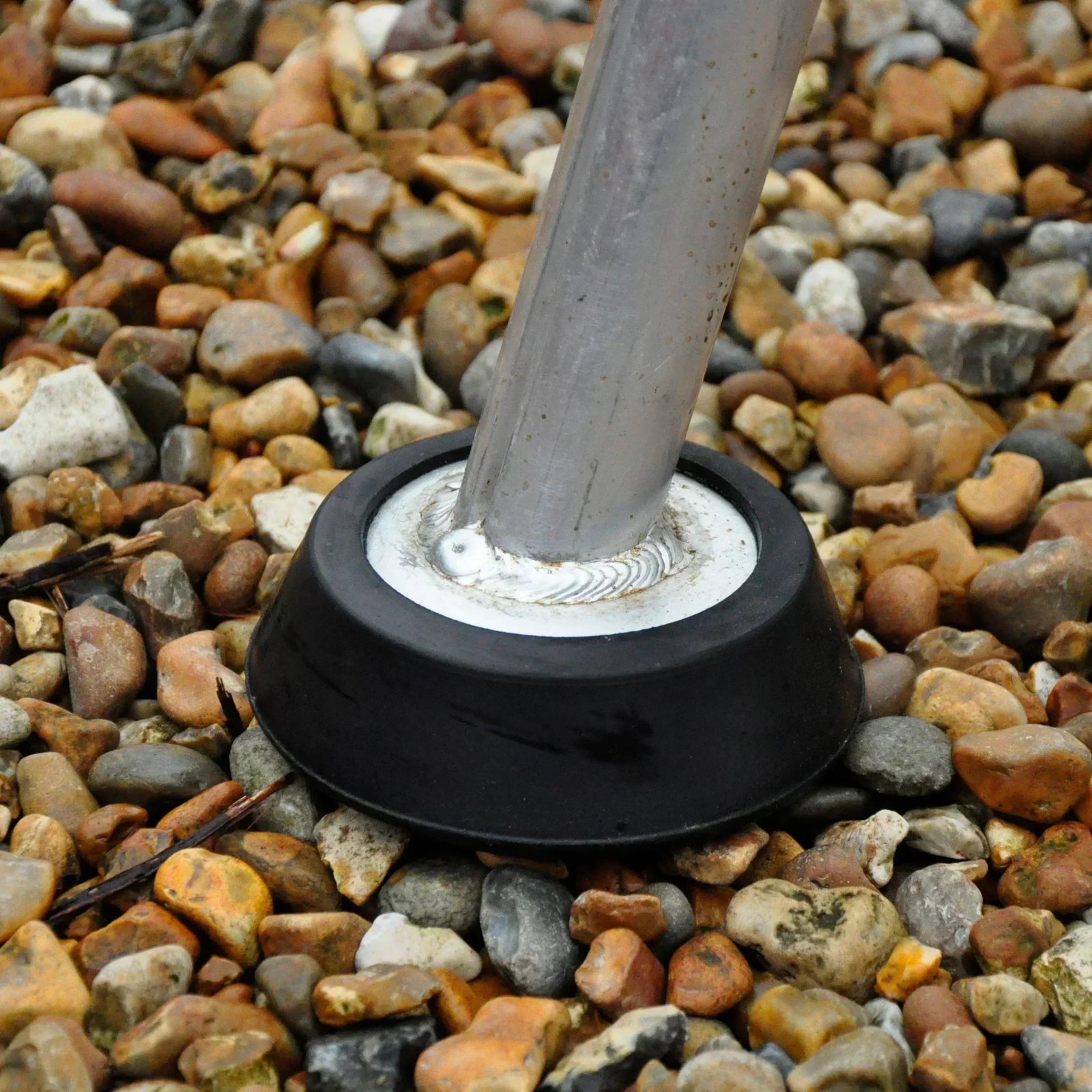
Our ladders aren't just for gardens. With the rubber feet, our Henchman Rear Adjustable Leg Tripod Ladder has fantastic grip on hard, flat surfaces, providing greater grip. It's very lightweight which makes it easy to manoeuvre from room to room, and the rubber feet won't leave any marks on delicate floors.

A lightweight, adjustable ladder
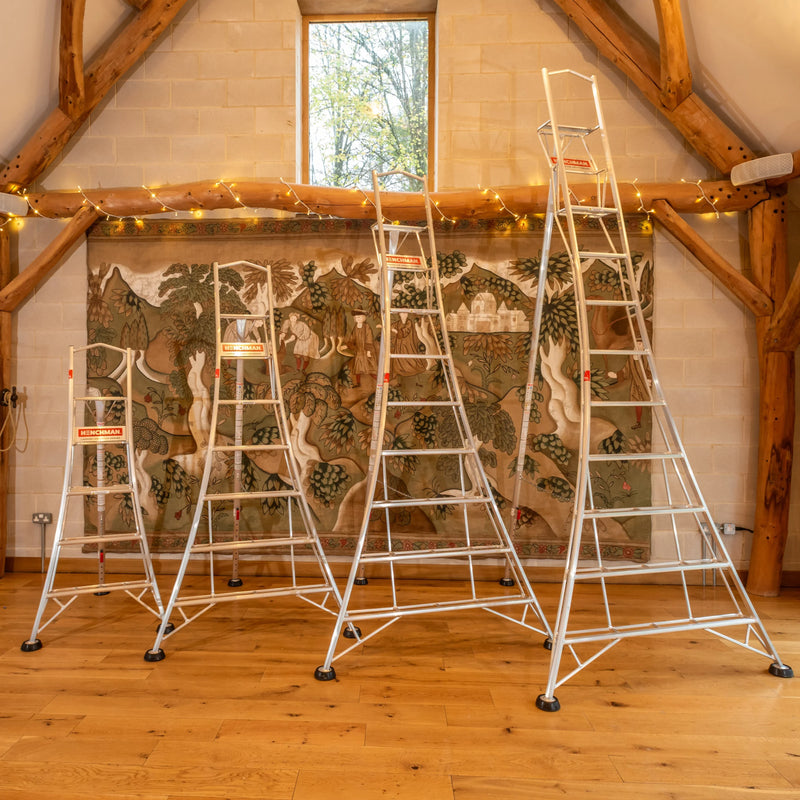
Our Rear Adjustable Leg Tripod Ladder has a starting weight of just 6kg - it’s our lightest ladder available! It’s great for moving around your garden as and when you need to, and the rear leg can be adjusted up to 6 inches (15cm) on the 6ft and 8ft Tripods or up to 12 inches (30cm) for the 10ft and 12ft versions.
Our Rear Leg Ladder can also be folded away in seconds, making it convenient to store both in and outdoors. No need to worry about storage space.

Work hands-free with our unique platform
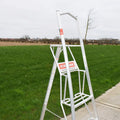
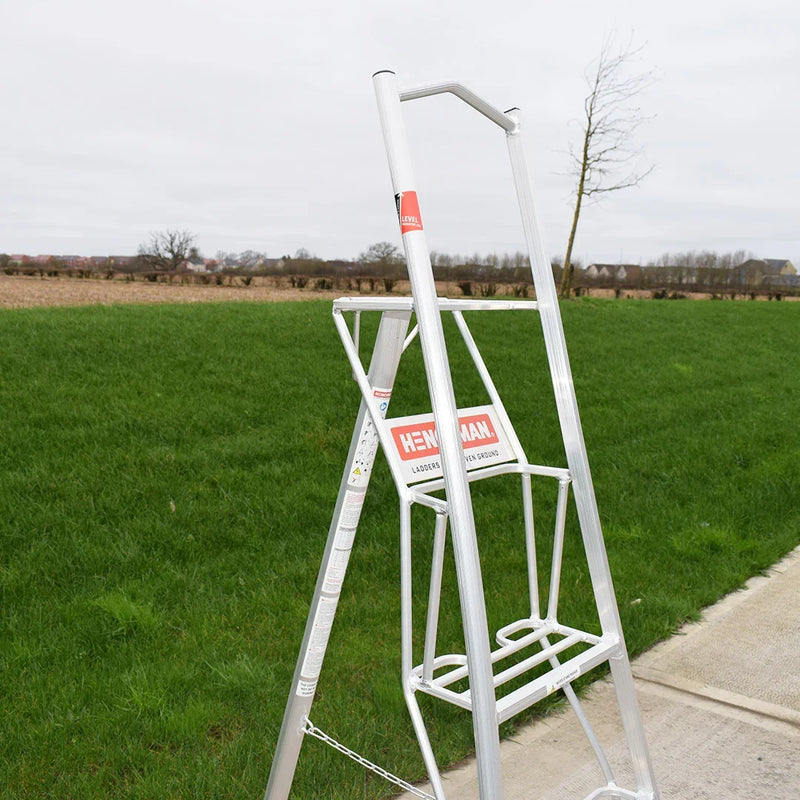
The Rear Adjustable Leg Ladder comes with a 7”/18cm platform rung that sits at the top 3ft of your ladder’s full height, no matter the size you have. You can stand comfortably on the platform without hitting your knees on the rung above and lean into the guard rail, keeping you safe when using tools that require two hands to hold. The deep ladder platform provides a comfortable space to stand, and the high guardrail feels more secure when leaning your waist against it.


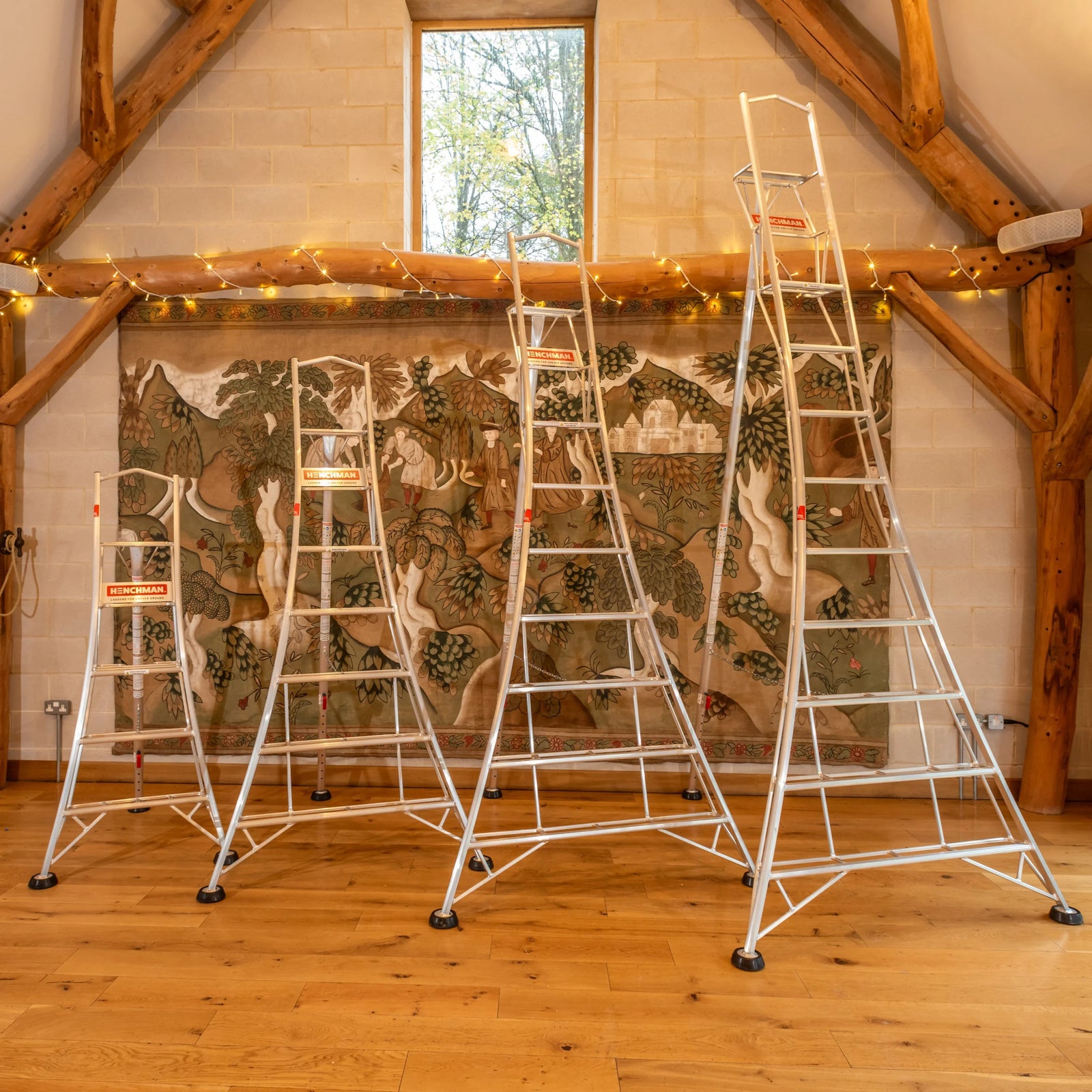
What are the dimensions of the Rear Adjustable Leg Tripod Ladders?

What size Rear Adjustable Leg Tripod Ladder do I need?

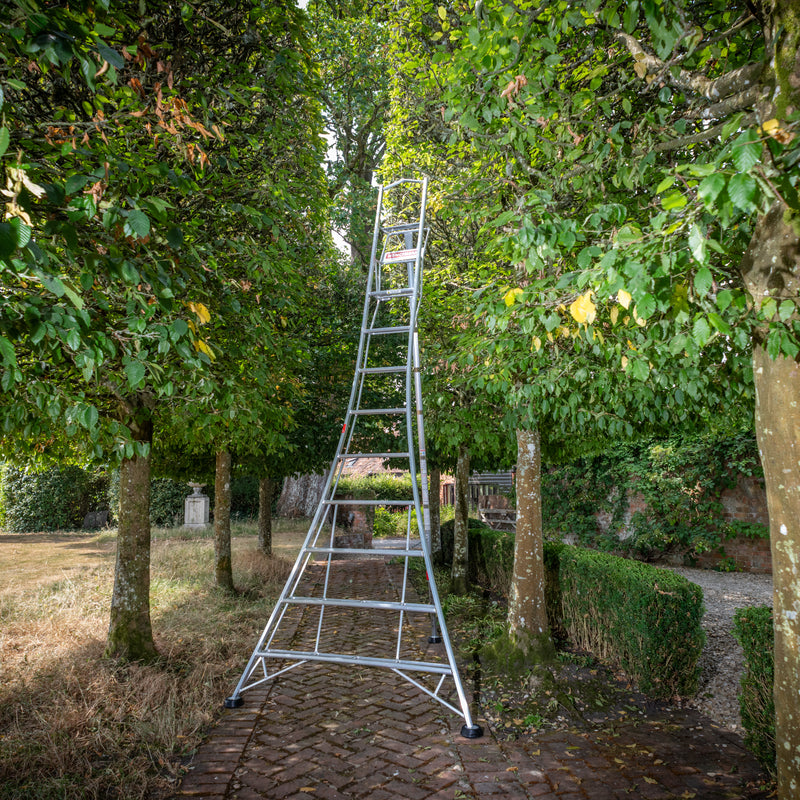
•Our ladders are measured as the total length of the ladder when the rear leg is fully retracted, from the feet of the ladder to the guard rail at the top.
•The guard rail at the top of the ladder will be around hip height when you are standing on the platform.
•The platform height is 90cm (3ft) below the top of the ladder.
•All dimensions and working heights provided are based on the rear adjustable leg being fully retracted (in the shortest position).
1. To find the right size rear leg adjustable tripod ladder, measure the height of the working area that you are trying to reach. This is the most important step – it’s very difficult to accurately “eyeball” heights. Not measuring the job height is the leading cause for incorrect height ladders being ordered. Whilst we do offer a free 14-day returns/exchange policy, we recommend carefully selecting the appropriate height ladder from the onset to avoid the inconvenience of a return or exchange.
2. Decide where you want your hands to be when performing the required task. Here are some examples of jobs you’d do at each hand height:
a. Overhead/reaching – Lightweight and low fatigue work, such as pruning the top of a rose/wisteria, painting house facia, changing lightbulbs, cleaning a roof light, etc.
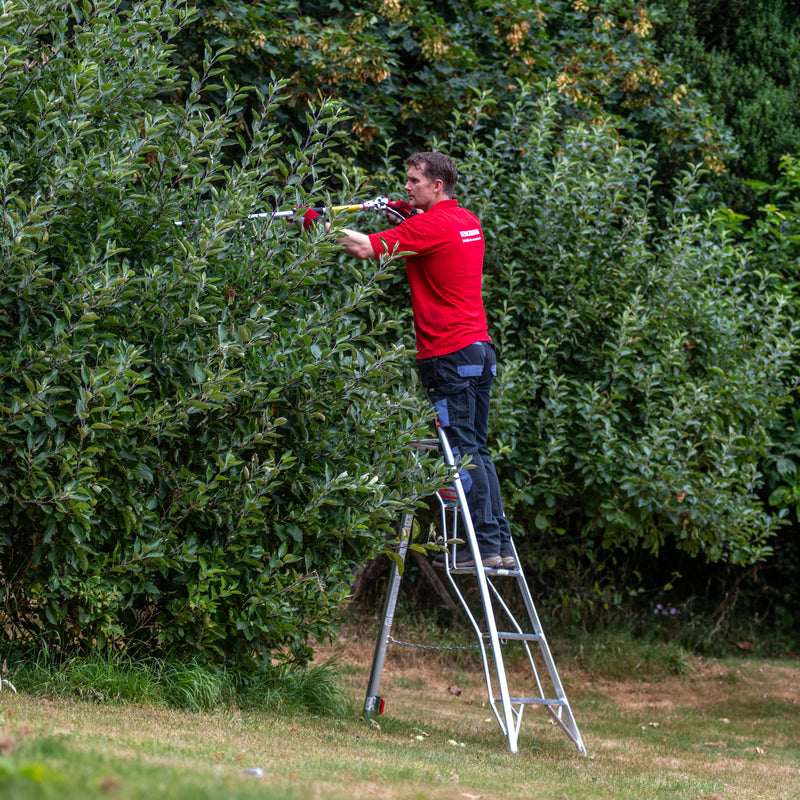
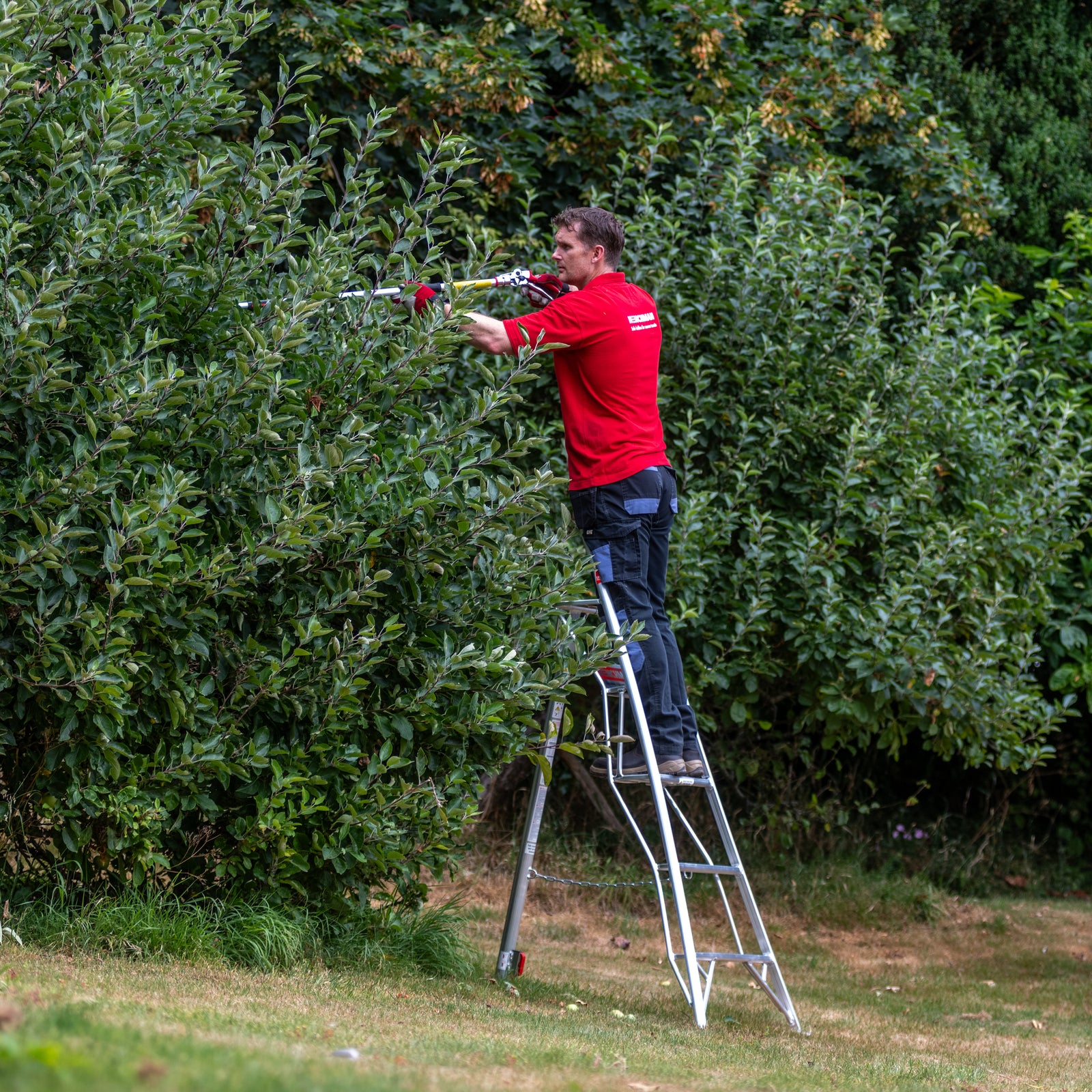
b. Shoulder level – Mid-weight work, such as trimming the side of a hedge with hand tools (shears), or short-duration hedge cutting with a powered hedge cutter, etc.
c. Hip level – Heavier weight work, such as top cutting a hedge with shears, etc.
3. Use the size guide in the diagram above to find the most suitable tripod size. For example:
a. Pruning the top of a 3.0m high rose bush = either the 1.8m or 2.4m tripod, depending if you want to be working closer to shoulder height or have full overhead reach.
b. Cutting the top of a 3.0 m high hedge = the 3.0m tripod. Your hips would be in line with the top of the hedge, the perfect position for holding a heavy hedge trimmer.
•Our ladders are measured as the total length of the ladder when the rear leg is fully retracted, from the feet of the ladder to the guard rail at the top.
•The guard rail at the top of the ladder will be around hip height when you are standing on the platform.
•The platform height is 90cm (3ft) below the top of the ladder.
•All dimensions and working heights provided are based on the rear adjustable leg being fully retracted (in the shortest position).
1. To find the right size rear leg adjustable tripod ladder, measure the height of the working area that you are trying to reach. This is the most important step – it’s very difficult to accurately “eyeball” heights. Not measuring the job height is the leading cause for incorrect height ladders being ordered. Whilst we do offer a free 14-day returns/exchange policy, we recommend carefully selecting the appropriate height ladder from the onset to avoid the inconvenience of a return or exchange.
2. Decide where you want your hands to be when performing the required task. Here are some examples of jobs you’d do at each hand height:
a. Overhead/reaching – Lightweight and low fatigue work, such as pruning the top of a rose/wisteria, painting house facia, changing lightbulbs, cleaning a roof light, etc.
b. Shoulder level – Mid-weight work, such as trimming the side of a hedge with hand tools (shears), or short-duration hedge cutting with a powered hedge cutter, etc.
c. Hip level – Heavier weight work, such as top cutting a hedge with shears, etc.
3. Use the size guide in the diagram above to find the most suitable tripod size. For example:
a. Pruning the top of a 3.0m high rose bush = either the 1.8m or 2.4m tripod, depending if you want to be working closer to shoulder height or have full overhead reach.
b. Cutting the top of a 3.0 m high hedge = the 3.0m tripod. Your hips would be in line with the top of the hedge, the perfect position for holding a heavy hedge trimmer.

•Our ladders are measured as the total length of the ladder when the rear leg is fully retracted, from the feet of the ladder to the guard rail at the top.
•The guard rail at the top of the ladder will be around hip height when you are standing on the platform.
•The platform height is 90cm (3ft) below the top of the ladder.
•All dimensions and working heights provided are based on the rear adjustable leg being fully retracted (in the shortest position).
1. To find the right size rear leg adjustable tripod ladder, measure the height of the working area that you are trying to reach. This is the most important step – it’s very difficult to accurately “eyeball” heights. Not measuring the job height is the leading cause for incorrect height ladders being ordered. Whilst we do offer a free 14-day returns/exchange policy, we recommend carefully selecting the appropriate height ladder from the onset to avoid the inconvenience of a return or exchange.
2. Decide where you want your hands to be when performing the required task. Here are some examples of jobs you’d do at each hand height:
a. Overhead/reaching – Lightweight and low fatigue work, such as pruning the top of a rose/wisteria, painting house facia, changing lightbulbs, cleaning a roof light, etc.
b. Shoulder level – Mid-weight work, such as trimming the side of a hedge with hand tools (shears), or short-duration hedge cutting with a powered hedge cutter, etc.
c. Hip level – Heavier weight work, such as top cutting a hedge with shears, etc.
3. Use the size guide in the diagram above to find the most suitable tripod size. For example:
a. Pruning the top of a 3.0m high rose bush = either the 1.8m or 2.4m tripod, depending if you want to be working closer to shoulder height or have full overhead reach.
b. Cutting the top of a 3.0 m high hedge = the 3.0m tripod. Your hips would be in line with the top of the hedge, the perfect position for holding a heavy hedge trimmer.

•Our ladders are measured as the total length of the ladder when the rear leg is fully retracted, from the feet of the ladder to the guard rail at the top.
•The guard rail at the top of the ladder will be around hip height when you are standing on the platform.
•The platform height is 90cm (3ft) below the top of the ladder.
•All dimensions and working heights provided are based on the rear adjustable leg being fully retracted (in the shortest position).
1. To find the right size rear leg adjustable tripod ladder, measure the height of the working area that you are trying to reach. This is the most important step – it’s very difficult to accurately “eyeball” heights. Not measuring the job height is the leading cause for incorrect height ladders being ordered. Whilst we do offer a free 14-day returns/exchange policy, we recommend carefully selecting the appropriate height ladder from the onset to avoid the inconvenience of a return or exchange.
2. Decide where you want your hands to be when performing the required task. Here are some examples of jobs you’d do at each hand height:
a. Overhead/reaching – Lightweight and low fatigue work, such as pruning the top of a rose/wisteria, painting house facia, changing lightbulbs, cleaning a roof light, etc.
b. Shoulder level – Mid-weight work, such as trimming the side of a hedge with hand tools (shears), or short-duration hedge cutting with a powered hedge cutter, etc.
c. Hip level – Heavier weight work, such as top cutting a hedge with shears, etc.
3. Use the size guide in the diagram above to find the most suitable tripod size. For example:
a. Pruning the top of a 3.0m high rose bush = either the 1.8m or 2.4m tripod, depending if you want to be working closer to shoulder height or have full overhead reach.
b. Cutting the top of a 3.0 m high hedge = the 3.0m tripod. Your hips would be in line with the top of the hedge, the perfect position for holding a heavy hedge trimmer.

•Our ladders are measured as the total length of the ladder when the rear leg is fully retracted, from the feet of the ladder to the guard rail at the top.
•The guard rail at the top of the ladder will be around hip height when you are standing on the platform.
•The platform height is 90cm (3ft) below the top of the ladder.
•All dimensions and working heights provided are based on the rear adjustable leg being fully retracted (in the shortest position).
1. To find the right size rear leg adjustable tripod ladder, measure the height of the working area that you are trying to reach. This is the most important step – it’s very difficult to accurately “eyeball” heights. Not measuring the job height is the leading cause for incorrect height ladders being ordered. Whilst we do offer a free 14-day returns/exchange policy, we recommend carefully selecting the appropriate height ladder from the onset to avoid the inconvenience of a return or exchange.
2. Decide where you want your hands to be when performing the required task. Here are some examples of jobs you’d do at each hand height:
a. Overhead/reaching – Lightweight and low fatigue work, such as pruning the top of a rose/wisteria, painting house facia, changing lightbulbs, cleaning a roof light, etc.
b. Shoulder level – Mid-weight work, such as trimming the side of a hedge with hand tools (shears), or short-duration hedge cutting with a powered hedge cutter, etc.
c. Hip level – Heavier weight work, such as top cutting a hedge with shears, etc.
3. Use the size guide in the diagram above to find the most suitable tripod size. For example:
a. Pruning the top of a 3.0m high rose bush = either the 1.8m or 2.4m tripod, depending if you want to be working closer to shoulder height or have full overhead reach.
b. Cutting the top of a 3.0 m high hedge = the 3.0m tripod. Your hips would be in line with the top of the hedge, the perfect position for holding a heavy hedge trimmer.
Can the legs be adjusted on steps or a slope?
The Rear Adjustable Leg Tripod Ladder is suitable for gentle slopes or flat ground only. As the front legs are not adjustable, they must both be positioned on level ground. The rear leg can be extended or retracted to accommodate sloping ground, provided the slope is directly in the direction that you wish to face.
You can use the Rear Adjustable Leg Tripod Ladder on:
- Gently sloping ground
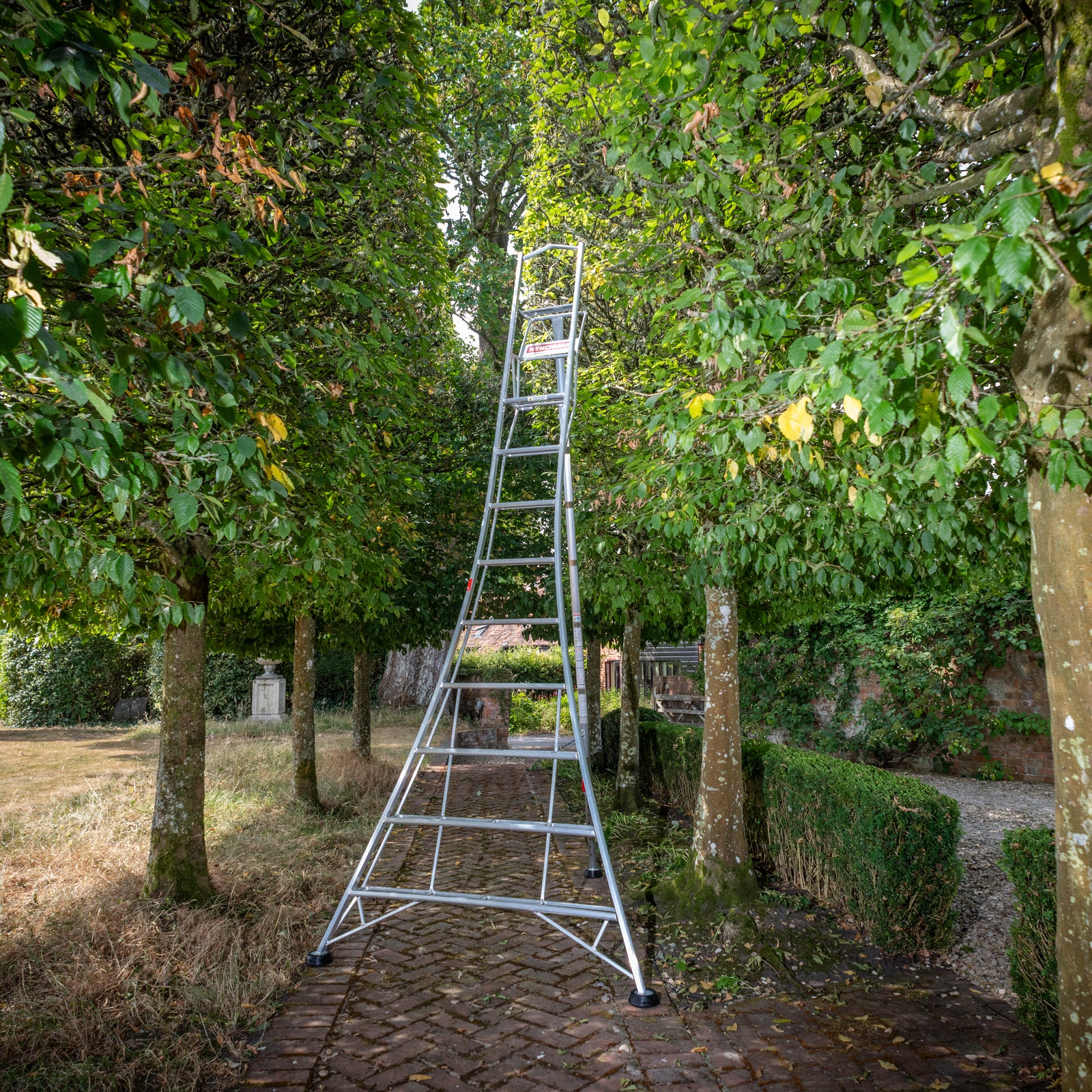
- Below trees where roots cause the ground to undulate
- Raised borders – provided the front legs are both at the same level
- Decking/patios
- Flat ground
- Soft ground
- Hard ground (when using the included rubber feet).
What’s the difference between the Rear Adjustable Leg and the Fully Adjustable Tripod?
The Fully Adjustable Tripod Ladder and the Rear Adjustable Leg Tripod Ladder share the same shape, footprint and platform design. On the Rear Adjustable Leg model, the front two legs (on the rung side of the ladder) are at a fixed height, and the rear leg is adjustable. With the Fully Adjustable Tripod Ladder, all three legs are independently adjustable legs so you can work safely on uneven ground.
Where the Fully Adjustable and Rear Adjustable Leg Tripod ladders differ:
- Weight – The Rear Adjustable Tripod is our lightest weight ladder, approximately 2kg less than the Fully Adjustable.
- Ground level – The Rear Adjustable Tripod is only suitable for flat or slightly sloping ground, whereas the Fully Adjustable Tripod is designed for true uneven ground, from steep slopes to garden steps.
What jobs is the Rear Adjustable Leg Tripod Ladder suitable for?
The Rear Adjustable Leg Tripod is suitable for a variety of jobs on flat or slightly sloped ground, including:
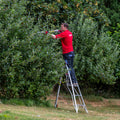
- Hedge trimming and topiary on flat or slightly sloped ground
- Painting ceilings
- Changing light bulbs
- Checking alarms or security cameras
- Cleaning caravans and motorhomes.
How much does the Rear Adjustable Leg Tripod Ladder weigh?
Refer to the chart under How do I store a tripod ladder?
How close can I get to the wall?

Alternatively, if you’re trimming a hedge that you want to face directly towards, you can push the individual rear leg into the base of the hedge to bring the top of the ladder within easy arm’s reach.
Alternatively, if you’re trimming a hedge that you want to face directly towards, you can push the individual rear leg into the base of the hedge to bring the top of the ladder within easy arm’s reach.
Alternatively, if you’re trimming a hedge that you want to face directly towards, you can push the individual rear leg into the base of the hedge to bring the top of the ladder within easy arm’s reach.
Alternatively, if you’re trimming a hedge that you want to face directly towards, you can push the individual rear leg into the base of the hedge to bring the top of the ladder within easy arm’s reach.
Alternatively, if you’re trimming a hedge that you want to face directly towards, you can push the individual rear leg into the base of the hedge to bring the top of the ladder within easy arm’s reach.
What is the BS EN131 Kitemark?
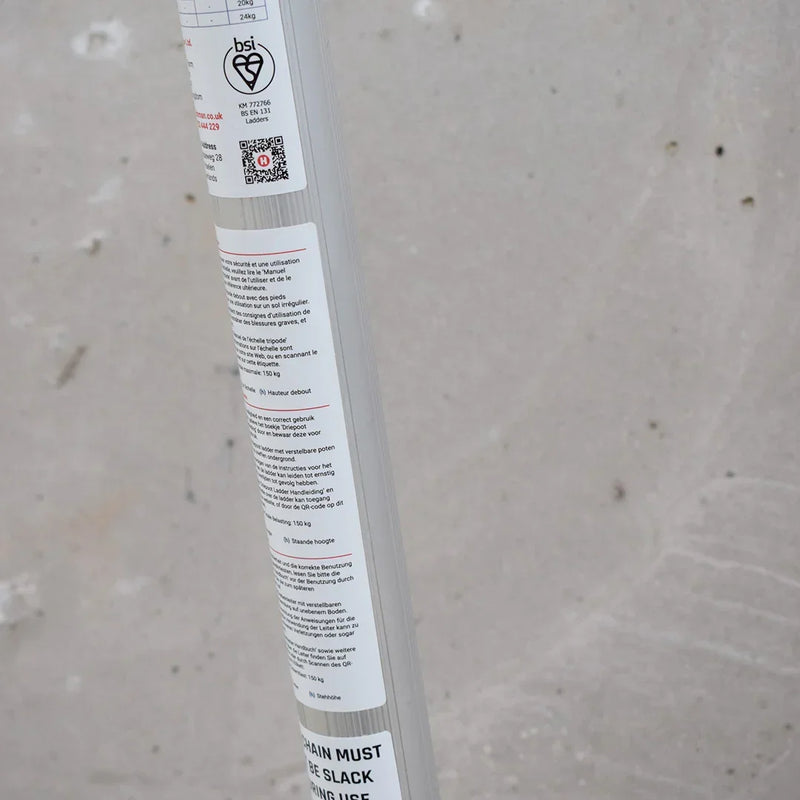
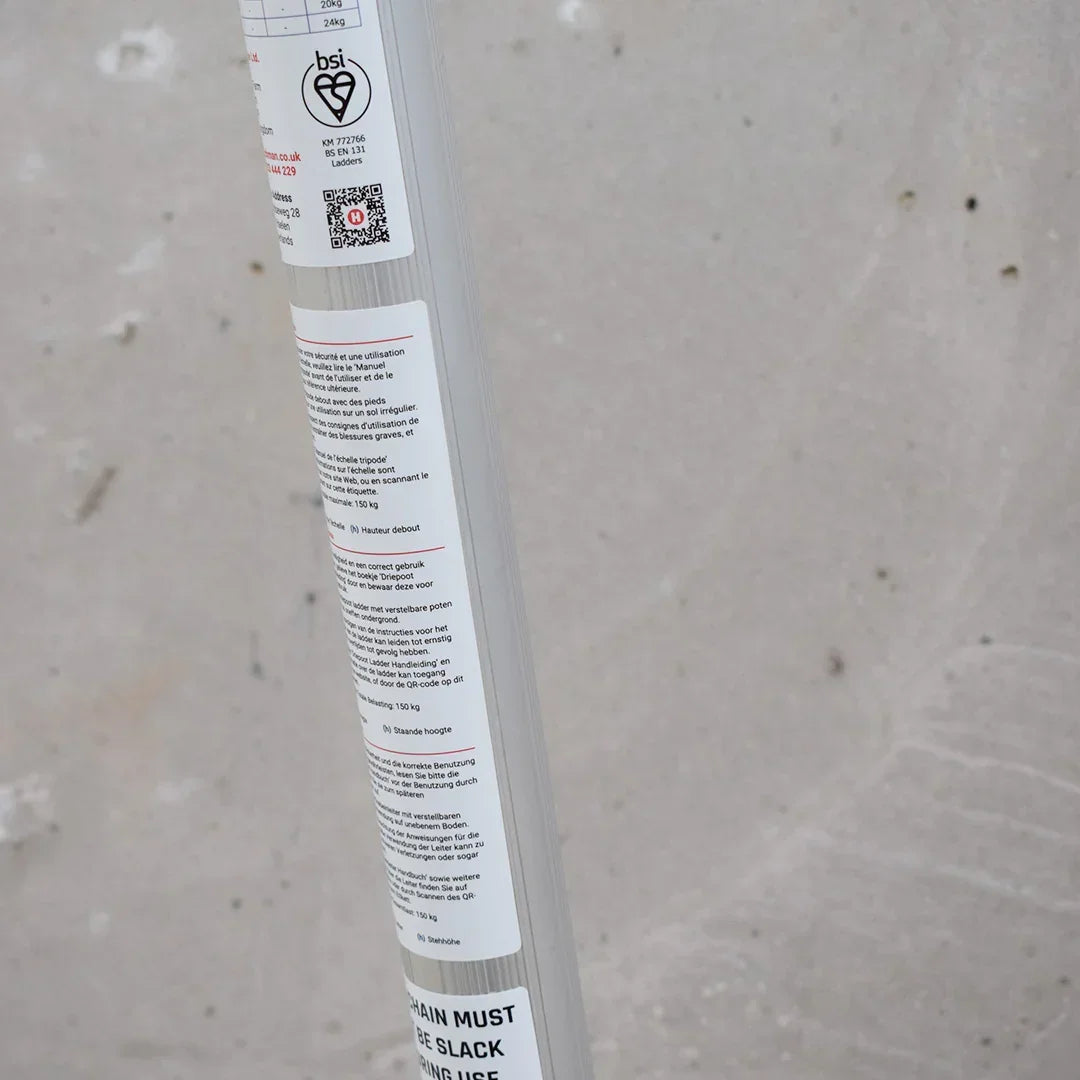
Our tripod range is certified to EN131 – the only tripods on the market in the UK and EU to have this certification. This means that Henchman ladders go through rigorous testing to meet the standards of The British Standards Institution (BSI). Our ladders are tested by an independent third party, checking their stability, grip, dimensions, labelling and their 150kg working load.
When it comes to EN131 standards, you may see phrases like ‘conforms’, ‘tested’ or ‘built to’ EN131. However, these terms can suggest that the ladder is not fully tested – for example, it could have the right dimensions but the working load may not have been safety tested.
Our Rear Leg Adjustable Tripod Ladder meets the full specification, meaning you
can be confident that your Henchman will keep you safe.
We have chosen to Kitemark our ladders, as Kitemark certification goes above and beyond just product testing. It looks at all aspects of the supply chain too, so you can rest assured that the ladders you receive are designed for the job your performing, safety tested to the highest standards, being produced by approved and audited manufacturers, and treated with through quality control measures through the whole of the supply chain.
If unsure about the quality of a ladder, the EN131 certificate should be
available to the public and can be shown to you when asked. Find out
more about EN131 ladder standards.
Are rubber feet included?
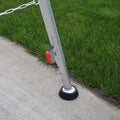
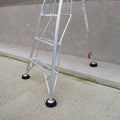
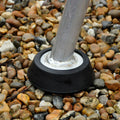
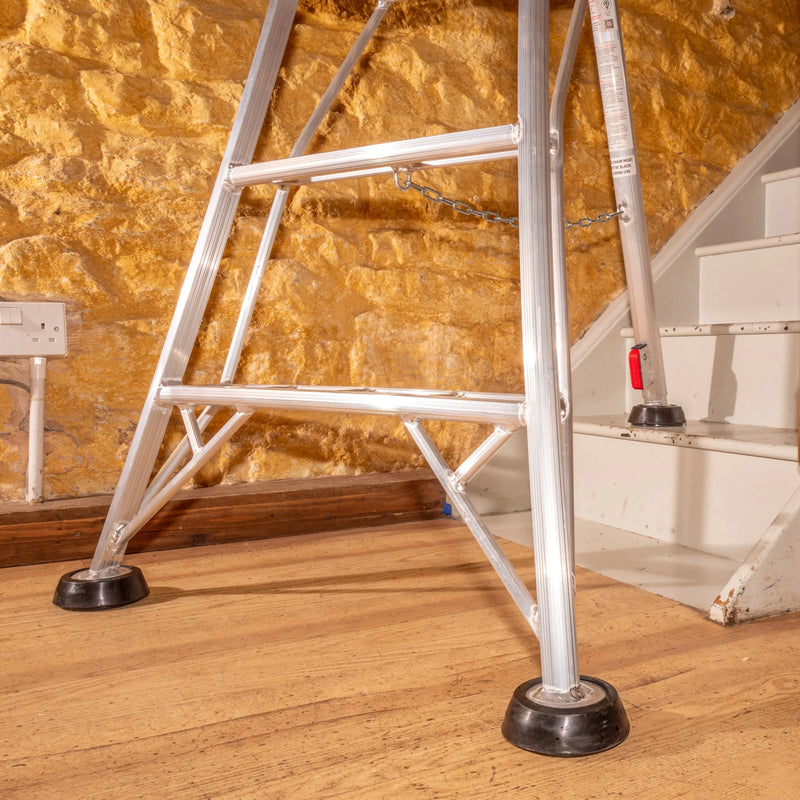
Yes, rubber feet are included free of charge with all Henchman tripod ladders. Their intended use is for adding grip when working on hard surfaces, as well as protecting surfaces from scratching.
Do you ship to Northern Ireland?
We work with a stockist in Northern Ireland, Booths Lawnmower Services. We don’t ship to Northern Ireland directly. Due to the shape and length of our ladders, we do not currently have a suitable courier solution that can reliably deliver individual orders.
For more information or to make an enquiry, please see our dedicated Northern Ireland page.
Do you offer any discounts?
No, we don’t offer any discounts. We believe in treating all of our customers fairly, therefore we operate a fair pricing policy. You can rest assured that if you buy a ladder today, it won’t be on sale tomorrow.
As part of our policy we don’t:
- Artificially inflate RRP’s or selling prices so we can offer a heavy “discount” or “sale”
- Run any sales or discount our ladder prices at any point in the year. The price you see is the price that everyone pays.
The only exception is for wholesale or bulk purchases, which are considered on a case-by-case basis.


